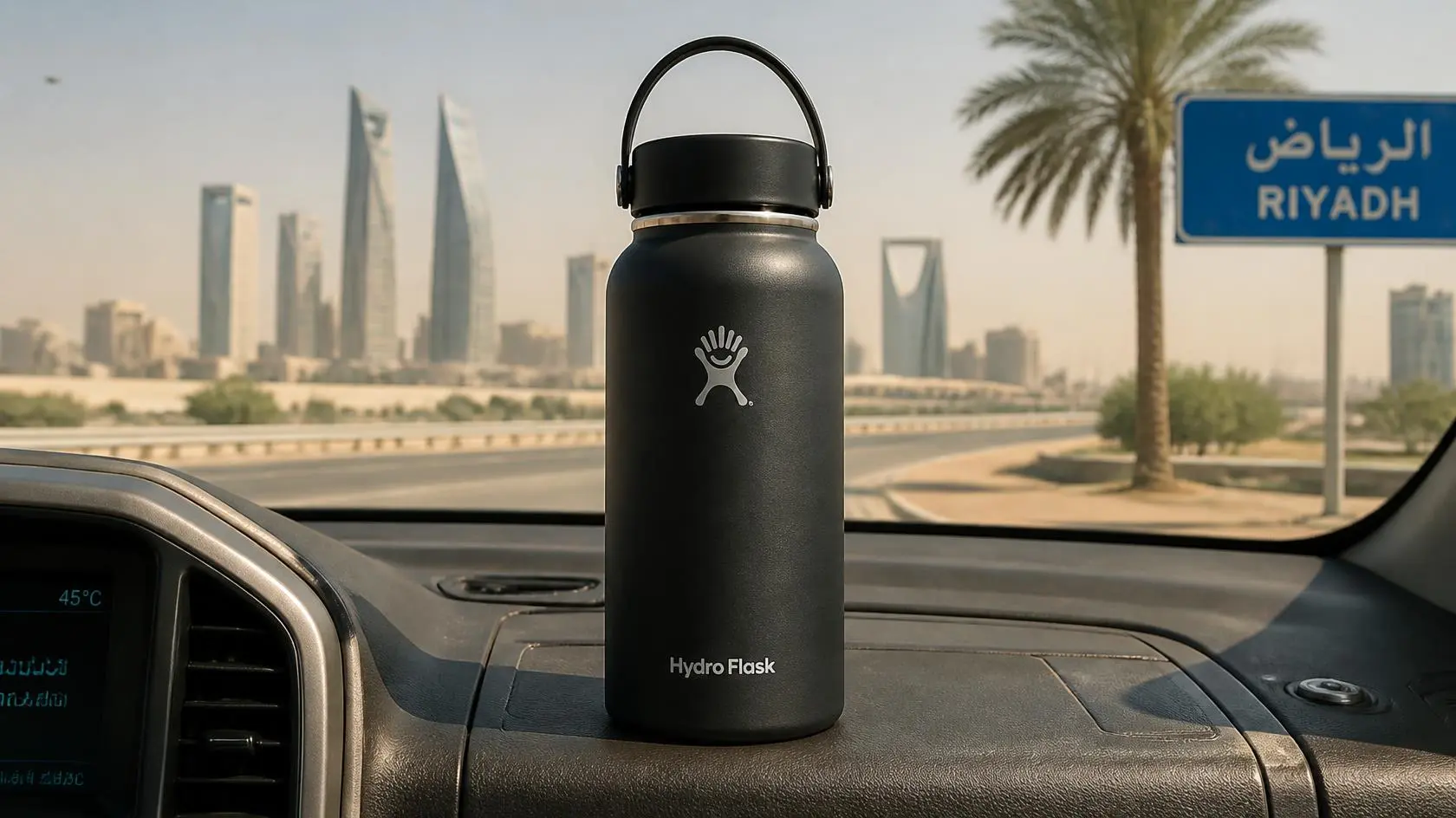
I have been through three kettles since I moved to Riyadh. The first one came with me from Pakistan — a decent mid-range model I had used for two years without a single problem. Within six months of daily use in my Al Rawdah apartment, the heating element had given up. The second, bought from Danube, lasted about the same. The third, bought from Amazon.sa, is still alive — but only because I changed how I use it.
The kettles did not fail because they were cheap. They failed because nobody warned me what Riyadh tap water does to a heating element when your TDS reads 480 ppm.
It Is Not the Kettle — It Is the Water
When you boil water in a kettle, something simple and destructive happens. Heat drives carbon dioxide out of the water. Without that CO₂ to keep calcium bicarbonate dissolved, it converts into calcium carbonate — and calcium carbonate does not stay liquid. It precipitates as a solid and sticks to whatever surface is hottest in the kettle. That surface is always the heating element.
As limescale accumulates on the element, hotspots form and the element eventually fails. Beyond the failure itself, each new layer of scale reduces heating efficiency, meaning your kettle uses more electricity with every boil — long before it dies completely.
In a soft-water country, this process is slow. Your kettle might last three or four years before limescale becomes a serious problem. In Riyadh — where my tap reads 480 ppm — the same damage happens in months.
Water hardness is broadly classified as follows: 1–100 ppm is soft to moderately soft; 100–200 ppm is moderately hard; anything above 200 ppm is hard to very hard. At 480 ppm, Riyadh tap water sits in the most aggressive bracket by a significant margin.
There is one more factor specific to Saudi Arabia: the rooftop tank. By the time your tap water has spent hours sitting in a fiberglass tank under 45°C summer heat, dissolved solids have concentrated further. You are not just boiling hard water — you are boiling pre-concentrated hard water that has been warming in the sun all day.
What Limescale Actually Does Inside Your Kettle
Most expats notice the white crust at the bottom of the kettle and treat it as a cosmetic issue. It is not. It is a mechanical one.
A layer of limescale acts as insulation on the heating element. The kettle must work significantly harder to heat the same amount of water, which raises your electricity bill and puts sustained stress on the element. Over time, that stress causes overheating and burnout.
The failure goes through predictable stages:

- White coating on the base and sides — calcium carbonate depositing after every boil.
- Slower boil times — the insulating layer is forcing the element to work harder.
- White flakes in your tea — loose scale breaking off the element.
- Complete element failure — the heating element stops working entirely.
Most expats accelerate this cycle without knowing it by leaving an inch of standing water in the kettle between uses. Every time boiled water sits in a hot kettle, dissolved minerals settle and re-stick to the interior surfaces. Empty the kettle after every use — this single habit makes a measurable difference.
In a 480 ppm environment, the full failure cycle from new kettle to dead element runs approximately four to eight months with normal daily use and no descaling. That matches exactly what I experienced across my first two kettles.
The Descaling Fix — What Works and What Does Not
Before replacing your kettle, try proper descaling. Most expats either skip it entirely or do it incorrectly.
White Vinegar — The Standard Fix
Fill the kettle halfway with equal parts white vinegar and water. Bring it to a boil. Leave it to soak for 30 to 60 minutes. Empty it, rinse thoroughly, then boil a full kettle of clean water and discard that water too. The acetic acid in the vinegar dissolves calcium carbonate without damaging the metal element, and it is safe for appliances that contact drinking water.
Citric Acid — Stronger and Cleaner
Dissolve one tablespoon of citric acid powder in a cup of hot water, pour it into the kettle, fill to the halfway mark, bring to a boil, and soak for one hour. Citric acid removes calcium deposits, soap scum, and light rust, and leaves behind no vinegar smell or taste. It is widely available in Saudi supermarkets in the baking aisle. This is my preferred method.
Commercial Descaler — Use With Caution
Some commercial descalers contain chemicals that can corrode kettle interiors over repeated use. If you go this route, look for products on Amazon.sa explicitly labelled as food-safe or suitable for kettles — and check the product page before using it in an appliance you drink from.
How Often to Descale in Riyadh
Global recommendations say every three to six months. At Riyadh’s TDS levels, descale every four to six weeks. If you can see visible white deposits or your water is taking noticeably longer to boil — descale immediately, regardless of where you are in the schedule.
Three Habits That Kill Saudi Kettles Faster
Beyond descaling frequency, these three specific habits accelerate element failure in hard water conditions:
1. Leaving water in the kettle between uses. Every time boiled water sits in a hot kettle, dissolved minerals settle and stick. Empty the kettle after every use. It takes two seconds.
2. Overfilling. Boiling more water than you need means more dissolved minerals passing over the element with every cycle. Boil only what you are about to use.
3. Skipping rinse boils after descaling. Descaling breaks limescale into loose particles. If you do not rinse properly before the next use, those particles end up in your tea — and the loose calcium debris settles and re-deposits on the element. Always run at least two full boil-and-discard rinse cycles after any descaling session.
The Permanent Fix — Use Filtered Water in Your Kettle
Descaling treats the symptom. The permanent solution is treating the water before it goes into the kettle.
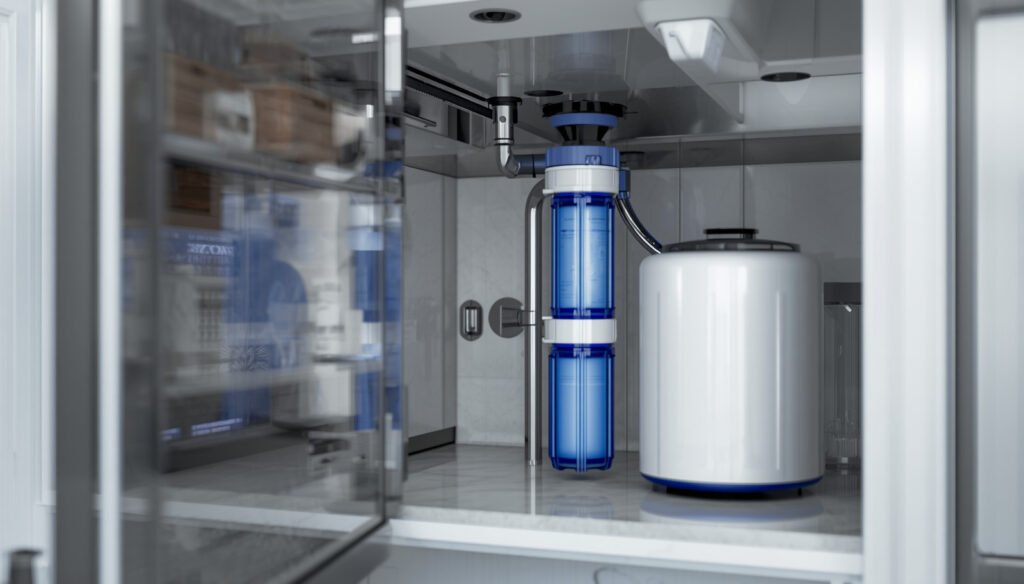
An under-sink RO filter brings your 480 ppm tap water down to approximately 10–40 ppm at the output tap. At that TDS level, the water contains almost none of the dissolved calcium and magnesium that causes limescale. The result is straightforward: a kettle filled from the RO tap builds limescale at a fraction of the rate of one filled from the main tap. The element lasts longer, the water boils faster, and the tea tastes cleaner.
For rented Saudi apartments, an under-sink RO filter is also far more practical than a whole-building water softener — it requires no landlord approval, no plumbing modification beyond the cabinet under your sink, and costs a fraction of a softener system.
I covered the full breakdown of which under-sink RO filters work on Riyadh water — including how to install one in a rented apartment without drilling into walls — in my best under-sink RO filter guide for Saudi Arabia. If you are already on your second or third kettle, that guide is worth reading before you buy a fourth.
Which Kettle to Buy If Yours Is Already Dead
If your current kettle has already failed, here is what to look for in a replacement given Saudi water conditions:
Stainless steel interior only. Avoid plastic interior kettles entirely. At 480 ppm, mineral deposits interact with plastic surfaces more aggressively and are harder to descale cleanly. Stainless steel descales completely with vinegar or citric acid.
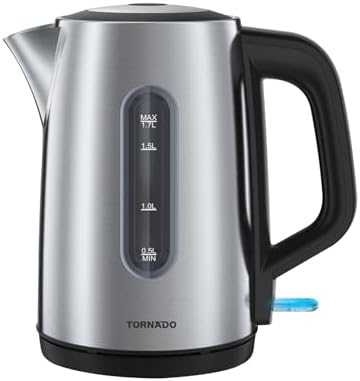
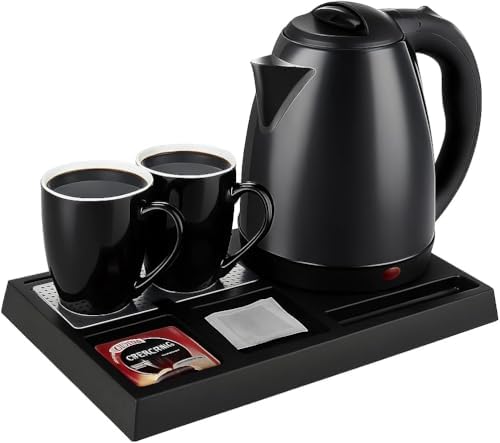
- Rapid Performance & Generous Capacity: Experience the power of fast boiling with up to 2200W, perfectly paired with a la…
- Sophisticated Durability & Advanced Safety: Crafted with a premium stainless steel housing and a 360° rotational base fo…
Removable and washable spout filter. Every kettle has a filter at the spout that catches limescale flakes. In Riyadh, this filter clogs within weeks on an undescaled kettle. A filter you can remove and soak in vinegar separately is essential.

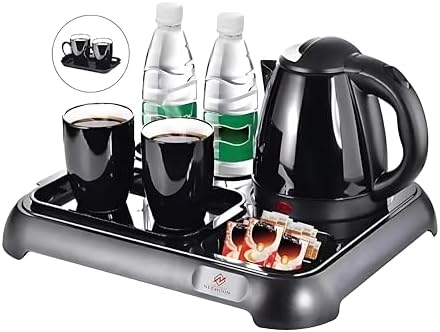
- CLASSIC DESIGN: This high quality BPA-free electric kettle adds a touch of elegance to any kitchen with a glossy box and…
- QUICK BOILING: With easy-to-read cup indicators, a cup of tea has never been faster. Simply fill your kettle with the am…
- Maximum Convenience: Open the lid with one touch to easily fill the kettle with water through the conveniently large ope…
Avoid glass as your primary kettle. Glass surfaces accumulate limescale deposits quickly, making the kettle appear permanently cloudy. If left untreated, deposits can etch into the glass, causing damage that does not clean off. In Riyadh’s water conditions, a glass kettle requires descaling every two weeks just to stay visually clear.
Buy locally on Amazon.sa. Do not bring a kettle from abroad. If the element fails — and in Riyadh conditions, eventually it will — local purchase means easy replacement without cross-border warranty complications.
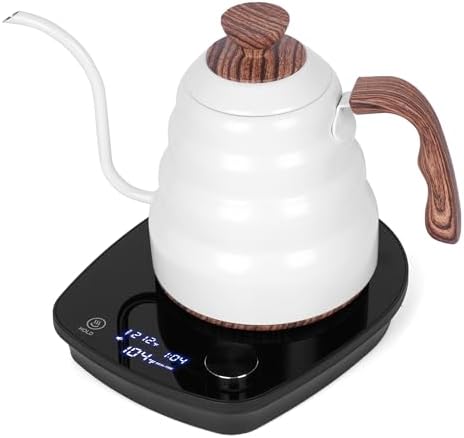
Best Selling



Frequently Asked Questions
No. The minerals that form limescale — calcium and magnesium — are not harmful. They are in fact essential minerals. Limescale is not classified as a contaminant. It is unpleasant in your tea and damaging to your appliance, but it is not a health risk.
Three signs to watch for: the kettle takes significantly longer to reach a boil than it used to; you can see heavy brown or reddish discolouration on the element itself rather than just a white coating; the kettle trips your building’s circuit breaker when switched on. The first two mean the element is under serious strain. The third means failure is close.
Yes — directly. Boiling is the exact process that converts dissolved calcium bicarbonate into solid calcium carbonate. Boiling hard water does not keep the kettle clean; it is the primary mechanism that causes limescale to form in the first place.
Commercially bottled water in Saudi Arabia typically reads between 40 and 200 ppm — significantly lower than Riyadh tap — so yes, bottled water will produce far less scale. However, it is an expensive and wasteful long-term solution compared to an RO filter tap. Zamzam water is highly mineralised and is not suitable for regular kettle use.
A water softener reduces calcium and magnesium content and does prevent new scale from forming. However, for appliances with existing visible limescale deposits, manual descaling with vinegar or citric acid is still required — a softener alone will not remove deposits that have already formed. In a rented Saudi apartment, an under-sink RO filter is a more practical and affordable solution than a whole-building softener system.
Rinse again. Run two full boil-and-discard cycles with fresh water after any vinegar or citric acid descale. The metallic smell is dissolved mineral residue from the descaling reaction — it clears completely after proper rinsing.
Read this: