My kitchen tap was reading 540 ppm. I already knew what that number was doing to my shower — I had dealt with that separately with a shower filter — but I had been quietly ignoring the fact that I was also drinking it. Not straight from the tap, technically. I had been doing what most Riyadh expats do: buying 5-gallon water bottles at SAR 8–12 per bottle from the supermarket, stacking them in the corner of my kitchen, and hauling replacements up the stairs every few days.
Then I did the maths. The RO system pays for itself in under a year compared to constantly buying those 5-gallon bottles. I installed an under-sink RO filter, and I have not bought a bottle since.
This is what I tested, what I paid, and what my TDS meter read before and after.
Why bottled water is not the answer in Saudi Arabia
Bottled water feels like the safe choice when you do not trust the tap. In Saudi Arabia, it is also an extremely expensive and logistically exhausting habit.
The deeper issue is what you are actually buying. Commercial bottled water in Saudi Arabia is typically either desalinated and remineralised, or sourced from underground aquifers. The TDS of common brands ranges from roughly 40 ppm to 200 ppm — cleaner than Riyadh tap water, but you are paying a significant premium for that gap.
A properly installed Reverse Osmosis (RO) system closes that gap permanently. Unlike the shower filters I tested separately, RO membranes genuinely strip dissolved solids out of the water. My tap reads 540 ppm. My RO output reads 16 ppm. That is cleaner than most bottled brands, produced on demand, at a fraction of the ongoing cost.
What RO actually does — and what it does not
Reverse Osmosis forces water through a semi-permeable membrane under pressure. Dissolved salts, heavy metals, nitrates, chlorine byproducts, and most biological contaminants cannot pass through. What comes out the other side is stripped water — very low TDS, no chlorine smell, no mineral taste.
Two trade-offs worth knowing before you buy:
1. It wastes water.
For every litre of filtered water, roughly 3 litres go down the drain. In Saudi Arabia where water bills can surprise you, this is worth factoring in. Some newer tankless units (like the Waterdrop G3) have improved waste ratios closer to 1:1, which partly justifies the higher price.
2. It removes beneficial minerals too.
Calcium and magnesium — which give water its taste and contribute to your daily mineral intake — are stripped along with the bad stuff. This is why some systems include a remineralisation stage (an extra filter that adds minerals back in controlled amounts). The iSpring RCC7 does not include one by default, but a remineralisation cartridge can be added as a 6th stage for around SAR 1400–1600. If flat-tasting water bothers you, it is worth adding.
Most under-sink units also include a pre-filter (sediment removal) and a carbon filter (chlorine removal) before the RO membrane, and a post-carbon polishing filter after it. Given the sediment load from Riyadh rooftop tanks, that pre-filter works hard and needs replacing more frequently than the membrane itself.
My 2026 test: filters on Riyadh tap water
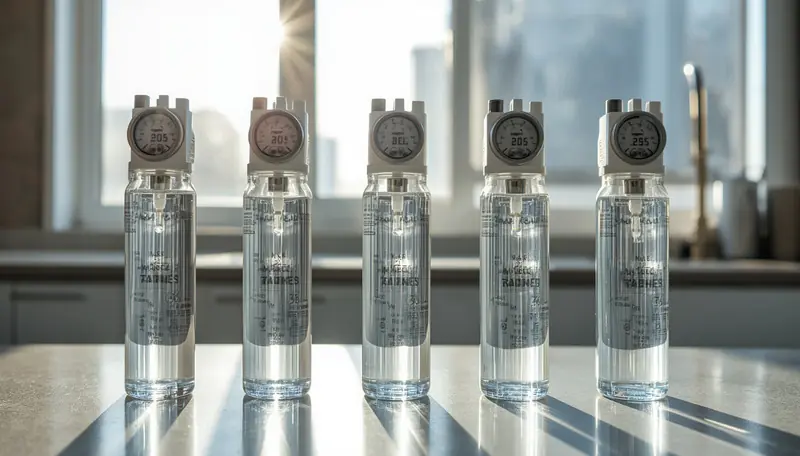
My baseline tap water was 540 ppm throughout the test period (measured three times across different days — consistent within 10 ppm). I ran every test in my apartment in Al-Malaz, Riyadh, using an HM Digital TDS-EZ meter calibrated against a known reference solution before starting.
Side-by-side comparison: Filters available on Amazon.sa (2026)
| Filter | Type | Price (SAR) | Output TDS | Reduction | Verdict |
|---|---|---|---|---|---|
| iSpring RCC7 | Under-sink RO | ~800 | 16 ppm | 97% | Best overall |
| Waterdrop G3 | Tankless RO | ~1,400 | 22 ppm | 96% | Best if no tank space |
| ZeroWater 7-Cup | Pitcher (ion exchange) | ~180 | 0 ppm | 100% | ⚠️ See note below |
ZeroWater warning for Saudi Arabia: ZeroWater pitchers are rated for roughly 150 litres per filter at 200 ppm input. At 540 ppm — which is Riyadh tap — that drops to approximately 40–60 litres per filter. A family of four can exhaust a filter in under two weeks. Replacement filters cost SAR 60–80 each, making the annual cost far higher than a full RO system. The ZeroWater is listed here for completeness, but it is not a practical long-term solution for high-TDS Saudi tap water.
What I actually installed
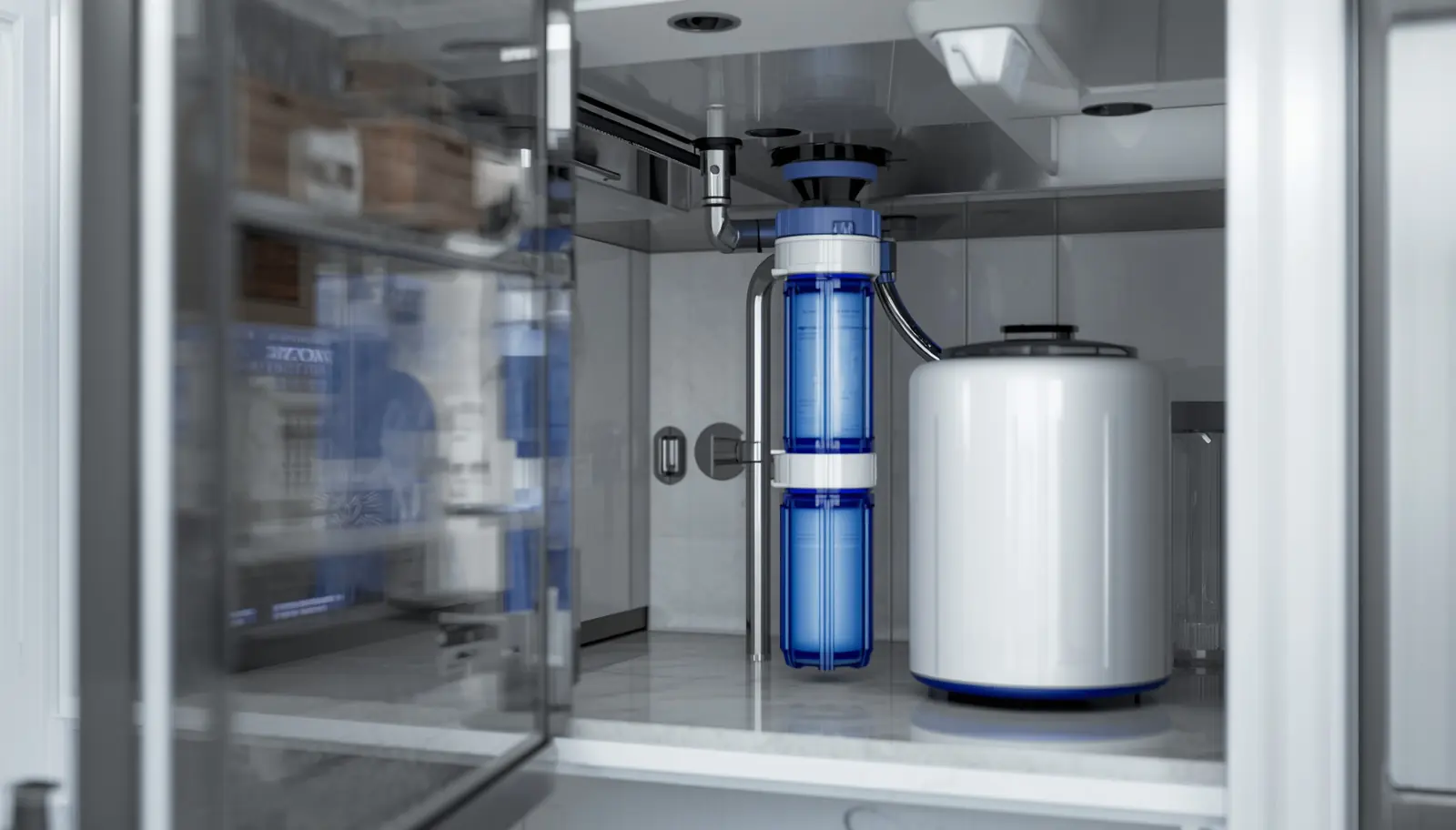
My setup after this test is the iSpring RCC7 under the kitchen sink for drinking and cooking water. This is a five-stage reverse osmosis system that mounts under your kitchen sink and feeds a dedicated faucet on the countertop.

The results were the best of everything I tested. TDS dropped from 540 ppm to 16 ppm — a reduction of around 97%. The water tasted noticeably different: cleaner, slightly flat (because minerals are removed — see the remineralisation note above if this matters to you), and completely free of the aftertaste Riyadh tap water usually has.
Available on Amazon.sa → (tabaix-21)
Filter replacement schedule for Saudi Arabia
Manufacturer schedules are calibrated for Western tap water at 150–300 ppm. Riyadh water at 500+ ppm exhausts filters faster. Use this as your actual maintenance calendar:
| Filter Stage | What It Does | Replace Every (Riyadh water) |
|---|---|---|
| Stage 1 — Sediment | Removes rooftop tank rust, particles | 3–4 months |
| Stage 2 — Carbon block | Removes chlorine before membrane | 6 months |
| Stage 3 — Carbon block | Secondary chlorine removal | 6 months |
| Stage 4 — RO membrane | Main filtration stage | 18–24 months |
| Stage 5 — Post carbon | Final taste polish | 6–12 months |
| Stage 6 — Remineralisation (optional add-on) | Adds calcium and magnesium back | 6 months |
Annual filter set (stages 1–3 and 5): approximately SAR 80–120 from Amazon.sa. The membrane itself (stage 4) is a separate purchase when due.
Installation in a rented Riyadh apartment — what to expect
This is the question most expats get stuck on. You rent. Your landlord controls the building. You do not want to leave permanent damage.
The honest answer is that under-sink RO installation in a standard Saudi apartment is straightforward and fully reversible:
- The system connects to the cold water supply line under your kitchen sink using a saddle valve — no pipe cutting required
- The waste line connects to your drain using a small clamp fitting
- The dedicated faucet requires a hole in your sink or countertop — most Saudi sinks already have a spare blanking plug hole for this purpose. If yours does not, a stainless faucet hole can be drilled by any local plumber for SAR 30–50, and capped when you leave
- The tank sits inside the under-sink cabinet — no wall mounting needed
Take photos before and after installation. When you move out, remove the unit, replace the blanking plug, and the kitchen is exactly as you found it. In practice, landlords rarely object — RO units are extremely common in Saudi apartments.
Installation took me about 90 minutes. As an electrician I have worked in tighter spaces, but even without a technical background the iSpring instructions are clear.
Frequently asked questions
Yes. Reverse osmosis systems remove 95–99% of TDS. A quality membrane will bring 540 ppm tap water down to 16 ppm output consistently.
More often than the manufacturer assumes — see the replacement schedule table above. Check stage 1 (sediment) at the 3-month mark on Riyadh water. High TDS exhausts filters faster than the manufacturer’s home-country testing assumes.
It can. Because minerals are removed, some people find pure RO water tastes thin. Adding a remineralisation stage (Stage 6) puts calcium and magnesium back in and improves taste significantly for around SAR 40–60 extra.
Yes in most cases. Most expats with basic DIY confidence can install a standard under-sink unit in roughly 90 minutes. The only step that may need a local plumber is drilling a faucet hole if your sink does not have a spare blanking plug — budget SAR 30–50 for that.
It drains directly into your kitchen drain line via the included waste line fitting. For every litre of filtered water, roughly 3 litres go down the drain on a standard 5-stage unit. Tankless models like the Waterdrop G3 have improved ratios.
In practice, no. This is an extremely common modification in Saudi apartments and leaves no permanent damage. It is fully removable when you leave.
Read my recent Article : 5 Riyadh filters that remove TDS