The visa is the first real step of Umrah, and it is also the step where people waste the most time and money. The reason is simple: “Umrah visit visa” is not one visa. It is a phrase that covers at least four different ways into Saudi Arabia, and which one is open to you depends on your passport, on whether you already hold a visa from the United States, the United Kingdom or a Schengen country, and on whether you have family living in the Kingdom.
This guide covers all four doors. It explains the 30-day entry rule that catches people out, the new multiple-entry Umrah visa, the long-term 10-year visa that only United States citizens can get, and the family visit visa that most travellers from Pakistan actually use. It also explains the one rule that runs through everything: the visa gets you into the country, and a separate, free Umrah permit booked in the Nusuk app gets you into the Haram for the rite itself. No visa, of any kind, replaces the permit.
One rule governs the whole guide: visa fees and rules change. This guide deliberately quotes no fee figure. Every fee is shown to you on the official portal during the application, before you pay anything. If a number in this guide and a number on Nusuk disagree, Nusuk is right. If you want the step-by-step of the journey itself — the rites, the duas, what to pack, the mistakes to avoid — read our Umrah step by step guide. If you want the full detail on the three main Umrah visa routes, read our Umrah visa guide.
What an Umrah Visit Visa Actually Is
An Umrah visit visa is a visa that lets a Muslim traveller enter Saudi Arabia and perform Umrah in Makkah and Madinah. It is not a work visa, it is not a residence permit, and it is not a Hajj visa. None of the visas in this guide can be used for Hajj. That is the first thing to fix in your mind, because the confusion between Umrah and Hajj visas causes more failed trips than any other single mistake.
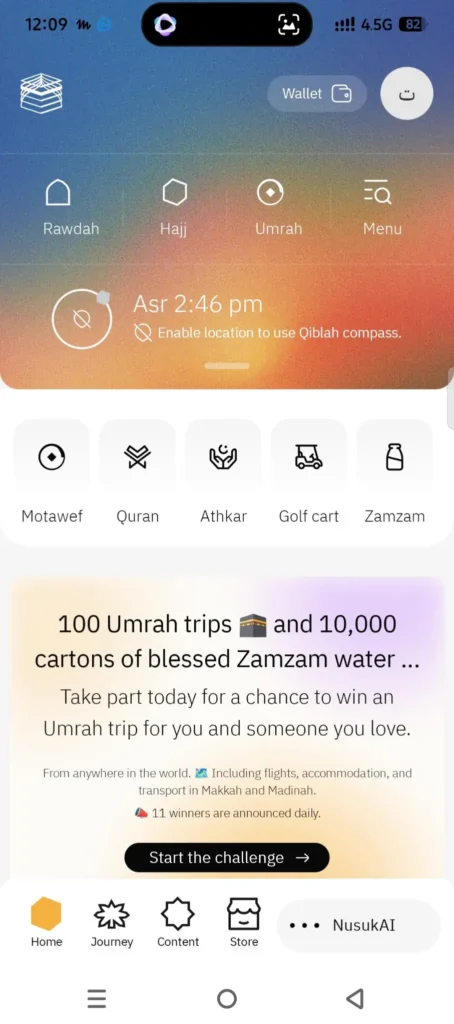
The second thing to fix is the difference between the visa and the permit. The visa is permission to enter Saudi Arabia. The Umrah permit is permission to perform the rite at a booked time, and it is booked free through the Nusuk app after you have your visa. Travellers land in Jeddah with a valid visa and assume they can walk into the Haram — they cannot, not without the permit. The permit system is how the authorities manage the crowds at the Mataf and the Rawdah in Madinah, and it applies to every pilgrim on every visa type, including the tourist eVisa and the visa on arrival.
The third thing to understand is that Saudi Arabia now permits Umrah on almost any valid visa, outside the Hajj season. A tourist visa, a visit visa, a business visa and a transit visa can all be used for Umrah, provided you book the free permit in Nusuk. The dedicated Umrah visa is the traditional route, but it is no longer the only one. That is good news, because it means the right question is not “how do I get an Umrah visa” but “which visa is easiest for my passport” — and for many travellers the answer is not the dedicated Umrah visa at all.
The Four Doors Into Saudi Arabia
Strip away the noise and almost every pilgrim enters through one of four doors: the tourist eVisa, a visa on arrival, the dedicated Umrah visa, or a visit visa they already hold through family or business. Each door has different rules, different documents and a different clock. Here they are, in the order you should try them.
The tourist eVisa
The tourist eVisa, applied for at visa.visitsaudi.com, is the most flexible door and the one to try first if your passport qualifies. It is valid for one year from the date it is issued, it allows multiple entries, and each stay can last up to 90 days. It is issued for tourism or for performing Umrah, and it is not a work visa. The application is online, the decision usually comes within a few working days, and the visa is linked to your passport number.
The list of nationalities that can apply directly is set by the Saudi Ministry of Tourism, and it changes. At the time of writing it covers 68 countries, including the United States, the United Kingdom, Canada, most of Europe, Australia, Japan, Malaysia and Singapore. Pakistan, India, Bangladesh, Indonesia, Egypt and Nigeria are not on that list. If your passport is on the list, apply here first — it is the cheapest and fastest route, and you should try it before you pay anyone else. If your passport is not on the list, skip to the dedicated Umrah visa or the family visit visa below.
Visa on arrival
Citizens of the eVisa-eligible countries can get the same one-year, multiple-entry visa at the airport when they land. You go to the visa-on-arrival counter, show your documents, pay the fee by card, and the visa is issued there. It is the same deal as the eVisa, just arranged at the border instead of in advance.
There is a second group that qualifies for visa on arrival: travellers who hold a valid, previously used tourist or business visa from the United States, the United Kingdom or a Schengen country, or who hold residency in one of those places. This is the route that many Pakistani travellers use, because a used US, UK or Schengen visa in their passport opens a door that their Pakistani passport alone does not. The conditions are strict, and the most important one is the word “used”. The qualifying visa must have been used at least once to enter the country that issued it, and it must still be valid on the day you land in Saudi Arabia. An expired visa does not count, and a visa that has never been used usually does not count either. There is also a warning about Schengen visas that has its own section below, because since April 2026 Schengen countries record entries digitally and no longer stamp passports — and the visa-on-arrival rule still asks for a physical entry stamp. Confirm in advance that a digital record will be accepted.
The dedicated Umrah visa
The classic Umrah visa still exists, and for most nationalities not on the eVisa list it remains the main route. What has changed is the machinery behind it. Every Umrah visa is now issued through the Nusuk system, and since August 2025 individuals in many countries can apply directly through the Nusuk Umrah platform, umrah.nusuk.sa, where the visa, the hotel and the transport are arranged in one place. For travellers from Pakistan and other countries outside the eVisa list, the practical route is still usually a licensed travel agent, who arranges the visa together with flights and hotels as a package.
Two rules deserve bold print. First, a change introduced in late 2025: the single-entry Umrah visa must be used to enter Saudi Arabia within 30 days of issuance, or it is automatically cancelled. The old 90-day entry window is gone. Once you have entered, you may stay up to 90 days, but you must leave by the season’s final departure date regardless of what your visa says. Second, a stand-alone visa with nothing attached is no longer the norm: the system requires verified hotel and transport bookings logged in Nusuk before the visa is issued. If an agent offers you a visa with no hotel and no transport attached, ask how it will be issued — and get the answer in writing before you pay.
There is also now a multiple-entry Umrah visa, introduced in July 2026. It is valid for one year from issuance, with up to 90 days of stay in total across that year rather than per visit. It needs a Nusuk package and a permit for each visit, and it cannot be used in the Hajj season. It suits the traveller who goes more than once a year — for example, once in Ramadan and once later in the year — and who does not want to apply from scratch each time.
The visit visa you already hold
The fourth door is the one people forget. If you already hold a valid Saudi visa of another kind — a family visit visa, a business visit visa, a tourist visa — you can perform Umrah on it, outside the Hajj season, provided you book the free permit in Nusuk. This is how many Pakistanis already in the Kingdom on a family visit visa perform Umrah without applying for anything new. The family visit visa has its own section below, because it is the route most readers from Pakistan will actually use.
The 30-Day Entry Rule (and the Season Dates)
The 30-day rule is the single most important fact in this guide, because it is the rule that cancels visas silently. The single-entry Umrah visa must be used to enter Saudi Arabia within 30 days of the date it is issued. If day 31 arrives and you have not entered, the visa is automatically cancelled. There is no extension and no refund to count on. The old rule gave you 90 days to enter; that rule is gone since late 2025.
The practical consequence is about timing. Do not apply for the Umrah visa two months before you fly. Apply so that the visa is issued close to your travel date, with enough margin for a document correction but not so much margin that the 30 days run out. If your flight is on the 25th of the month, an application in the first week of that month is the right shape. If your agent issues the visa six weeks before departure, ask why — and ask what happens if the 30 days expire.
The Umrah season itself has dates too. For the current 1448H season, visa issuance and pilgrim entry reopened on 31 May 2026 after the annual Hajj pause. The last Umrah visa is issued on 9 March 2027, the last entry into the Kingdom is 23 March 2027, and every Umrah-visa pilgrim must be out of the country by 7 April 2027. These dates come from the Ministry of Hajj and Umrah’s published season calendar, as reported by several travel guides. The 30-day rule and the season dates work together: your visa must be used within 30 days of issue, and your stay must end by the season’s final departure date, whichever comes first. The tourist eVisa has different rules — one year, multiple entries, up to 90 days per stay — so do not mix the two sets of dates up. Read the dates printed on your own issued visa; they are the ones that count.
Umrah Visa from Pakistan
Most of this blog’s readers are travelling from Pakistan, and the Pakistan route has its own quirks. The first quirk is that Pakistan is not on the tourist eVisa list, so the online eVisa door is closed to a Pakistani passport on its own. The second quirk is that the route that is open depends heavily on what else is in your passport. Here is how it works in practice.
If you hold a valid, previously used visa from the United States, the United Kingdom or a Schengen country, you may qualify for visa on arrival at a Saudi airport. This is the cheapest route for many Pakistanis, because there is no agent and no package — you land, go to the counter, show the used visa and your return ticket and hotel booking, pay the fee by card, and the visa is issued. But read the conditions carefully: the qualifying visa must have been used, it must still be valid on the day you land, and the Schengen digital-stamp problem in the section below applies to you. Confirm the current wording on visa.visitsaudi.com before you fly, and do not book a non-refundable ticket on the assumption that visa on arrival will work.
If you do not hold a used US, UK or Schengen visa, the standard route is the dedicated Umrah visa through the Nusuk Umrah platform or a licensed travel agent. The agent arranges the visa with your flights and hotel as a package, and the bookings are logged in Nusuk before the visa is issued. Your part of the job is the documents: a passport valid for at least six months from the date you enter Saudi Arabia, a recent passport-style photograph with a plain white background, your travel dates, your flight booking and your hotel booking, and proof of your return or onward journey. A one-way ticket is a problem — it looks like you do not intend to leave, and it is one of the things that gets applications and arrivals questioned. Always book a return.
Children need their own passport and their own visa — a child cannot travel on a parent’s passport. Women travelling for Umrah follow the same visa process as men. The old rule that required a male guardian for women under a certain age has been relaxed, and women may now travel for Umrah without a mahram — but the rules for this have changed more than once, so confirm the current position on Nusuk or with your agent before you travel. Do not rely on what someone told you three years ago.
The danger on the Pakistan route is the bad agent. A licensed agent asks for your passport, your photograph and your booking details, and nothing else. No bank statements, no property papers, no sponsor letters. If an agent asks for documents that have nothing to do with a visa, or asks to keep your original passport for weeks without a receipt, that is a warning sign. Check that the agent is licensed for Umrah by the Ministry of Hajj and Umrah, get the full package in writing — flights, hotel name, transport, visa — and never pay the full amount before the visa is issued. The full detail on spotting a bad agent, and on the documents list with the Pakistani e-passport, is in our Umrah visa guide.
The Saudi 10-Year Multiple-Entry Visa for US Citizens
This is the visa that confuses people the most, because it sounds too good to be true and because it is real. Saudi Arabia issues a long-term, multiple-entry tourist visa to citizens of the United States, with validity of up to ten years and up to 180 days of stay per entry. It can be used for tourism, for family visits and for Umrah. It cannot be used for Hajj, and it does not permit work.
Here is what is verified. Photographs of actually issued visas show a multiple-entry Tourism Visit visa, nationality United States, with a duration of stay of 180 days, issued by the Saudi Mission in New York — for example, one visa valid from 4 November 2026 until 1 November 2036. A specialist US agency, Tarteel Travel, states on its website that the visa is available to US citizens in all 50 states, that it is processed through the Saudi Ministry of Foreign Affairs visa system, and that a valid US passport with at least six months’ validity is required. The same agency lists a processing fee of 850 US dollars per applicant — that is the agency’s own processing fee, not the government visa fee, and it is quoted here only as one agency’s price so you know what agents charge.
Here is what is not verified. The government fee for this visa is not published on the Visit Saudi eVisa portal, and the online eVisa terms describe a one-year visa, not a ten-year one. That is because this long-term visa is arranged through the Saudi mission — the consulate — rather than through the online portal. It is also only for US citizens, not for permanent residents: a green card alone does not qualify. If you are a US citizen, confirm the current terms and the fee with the Saudi mission in New York or with an authorised agency before you apply, and read the validity and stay dates printed on the visa you receive. If you are not a US citizen, this visa is not open to you, however many videos you see about it — and that is the source of most of the frustration in the comments under those videos.
Who is it for? The traveller who visits Saudi Arabia often — several Umrah trips a year, family in the Kingdom, business travel mixed with pilgrimage. One visa, ten years, no fresh application each time. It is not for the one-off pilgrim: the tourist eVisa or the dedicated Umrah visa is cheaper and simpler for a single trip. And one practical note from travellers who hold it: activate the Tawakkalna app with your visa information when you arrive, because it generates a digital visitor ID that makes renting a car, renting property and opening a local bank account much easier. Many local merchants accept Mada cards and not foreign cards, so a Saudi bank account is genuinely useful on a long stay.
Family Visit Visa: the Route Most Pakistanis Actually Use
The family visit visa is how most Pakistanis visit relatives who live in Saudi Arabia, and it is also a route to Umrah — a family or friends visit visa now allows Umrah, though not Hajj. It works differently from a tourist visa, because the application is started by your relative in Saudi Arabia, not by you. There is no way to open a family visit application from Pakistan on your own.
The host must be someone living in Saudi Arabia: a Saudi citizen or a resident holding a valid residence permit, an Iqama. The host logs in to the MOFA platform, KSA Visa at ksavisa.sa, with Nafath — Saudi Arabia’s national digital identity login, which only citizens and residents have — and creates a family visit request, adding each relative being invited. The host’s Iqama must be valid; if it is close to expiry or under renewal, sort that out first.
Once the request is approved, the fee and the mandatory medical insurance are paid online by the host on KSA Visa. The Ministry of Foreign Affairs aims to decide within a maximum of three working days after the fee is paid, though it can take longer. Then you, the visitor in Pakistan, submit your passport at a Tasheer visa centre and give fingerprints for biometrics. Tasheer is the network of Saudi visa application centres, and there are centres in Islamabad, Lahore, Karachi, Peshawar and Quetta, operated in Pakistan by Gerry’s Visa.
The documents from your side are: an original passport valid for at least six months; a clear copy of your CNIC, or a NADRA B-Form or CRC for children; proof of relationship — a NADRA Family Registration Certificate, a Nikah Nama or Marriage Registration Certificate for a spouse, or a birth certificate for children and parents; and a copy of your host’s Iqama or Saudi ID. Make sure the names on every document match your passport exactly, letter for letter — a mismatch between the FRC and the passport is one of the most common reasons files are delayed. The Pakistani documents usually need attestation by Pakistan’s Ministry of Foreign Affairs, and an Urdu marriage certificate often needs a certified English or Arabic translation, so start the attestation early and do not leave it to the last week.
Two practical facts to know. First, since February 2025, visit visas issued to Pakistanis have been single entry — so do not plan a trip that needs you to leave and re-enter on the same visa unless the visa in your hand says multiple entry. Second, polio and MMR vaccination certificates are required for visitors travelling to Saudi Arabia on visit visas — keep the vaccination card with your passport. The family visit visa does not allow work, and it does not lead to residence. It is a visit, and it is an excellent one: a few months with family, and Umrah while you are there.
How to Apply: Step by Step
Whatever route fits you, the order of operations is the same. Follow it in this order and you avoid the two most expensive mistakes in the whole process — a non-refundable flight bought before the visa, and an agent paid for a visa you could have applied for yourself.
Step 1 — Find your door. Open nusuk.sa, select your nationality, and see which routes it offers you. That one check tells you whether the e-visa is open to your passport, and it stops you paying an agent for something you could have done yourself. If the e-visa is not open, check whether you hold a used US, UK or Schengen visa for the visa-on-arrival route, or whether you have family in Saudi Arabia for the family visit route. Only then look at an agent.
Step 2 — Check your passport. It must be valid for at least six months from the date you enter Saudi Arabia, counted from arrival, not from today. If it has less than six months left, renew it first. No visa route will save a passport that is about to expire.
Step 3 — Gather your documents. A recent passport-style photograph with a plain white background, your passport’s information page, your travel dates, your flight booking, your hotel booking and proof of your return journey. For the family visit visa, add the relationship documents and the attestation. For the agent route, your agent will ask for the passport and the photograph and the booking details — and nothing else.
Step 4 — Apply on the official platform. For the e-visa, apply on Nusuk or on visa.visitsaudi.com. For the family visit visa, your host applies on KSA Visa. For the dedicated Umrah visa, apply on the Nusuk Umrah platform or through a licensed agent. Use an email address you actually open, because the visa is sent to it, and create the account with your name exactly as it appears on your passport. A name mismatch is one of the most common reasons applications are delayed.
Step 5 — Pay on the portal, not to a person. The fee is paid online by card on the official platform, and the amount is shown to you before you pay. Medical insurance is mandatory and is bought on the same platform from Saudi-approved insurers. Never pay a visa fee in cash to an individual, and never trust a fee quoted in a blog post — including this one — over the figure on the portal at the moment you pay.
Step 6 — Wait, then check your email. Most e-visa decisions come within a few working days; the family visit route aims for three working days after payment; the agent route takes days and depends on the agent’s queue. When the decision arrives, it comes by email, and the visa itself is linked to your passport number. Print a copy and keep it with your passport, and keep a copy on your phone as well.
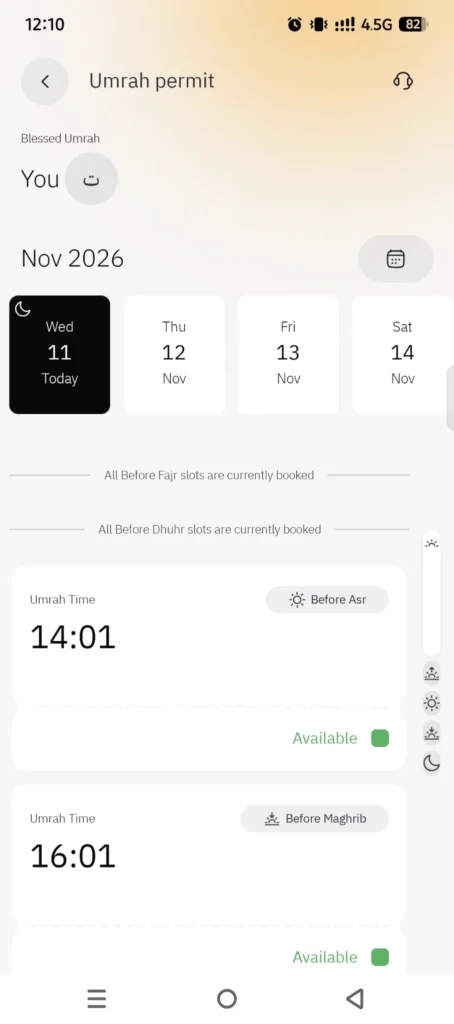
Step 7 — Book your Umrah permit in the Nusuk app. Download the Nusuk app before you fly, make sure it is signed in and working while you are still at home, and book your Umrah date and time slot — plus a Rawdah visit in Madinah if you want one. The visa gets you into the country; the permit gets you into the Haram. Without the permit you cannot enter the Mataf around the Kaaba or access the Rawdah, even with a valid visa.
Step 8 — Travel with the folder. Passport, printed visa, return ticket, hotel booking, vaccination certificates where required, and the qualifying US, UK or Schengen visa if you are relying on visa on arrival. Keep it all in one folder you can open in seconds. At the airport and at the hotel, both will ask for it.
The Schengen Digital-Stamp Warning
This warning matters to anyone planning to use a Schengen visa for visa on arrival, and it is the detail most guides written before 2026 get wrong. Since April 2026, Schengen countries record entries digitally and no longer stamp passports, while the official visa-on-arrival rule still asks for a physical entry stamp from the issuing country. The two rules have not caught up with each other.
What that means in practice: if your qualifying visa is a Schengen visa, your passport may have no stamp to show at the Jeddah or Riyadh counter, even though you genuinely entered the Schengen area. Do not assume the officer will accept your word for it. Before you fly, confirm in advance that a digital record will be accepted, and carry whatever proof you have that the visa was used — boarding passes, hotel confirmations, the digital entry record itself if you can obtain it. If you cannot get a clear confirmation, do not rely on visa on arrival for that trip; use the e-visa if it is open to you, or the dedicated Umrah visa through an agent. A once-in-a-lifetime journey is not the trip to test an unresolved rule on.
The same logic applies to US and UK visas, even though they still stamp in most cases: the qualifying visa must have been used at least once, and it must still be valid on the day you land. An unused visa does not qualify. An expired visa does not qualify. Check the current wording on the official visa site before you fly, and if the rule is unclear for your documents, ask the airline and the portal before you book, not after.
Fees: Read This First
This guide quotes no fee figure, and that is deliberate. Visa fees and insurance costs are set by the Saudi authorities, they are shown on the official portal during the application, and they change without notice. A fee quoted in a blog post — including this one — can be out of date by the time you read it, and acting on an old figure is how people overpay or arrive short.
What you need to know about how fees work: there is a government visa fee, and there is mandatory medical insurance bought on the same platform from Saudi-approved insurers. The insurance is priced by the insurer, by your age and by the length of your stay, so there is no single published figure for it. The fee is paid online by card on the official platform, and the amount is shown to you before you confirm. If an agent quotes you a total, ask for the split — government fee, insurance, and the agent’s own service charge — in writing, before you pay. If the agent cannot show the split, find another agent.
One more warning about fees: beware of look-alike websites. Apply only on nusuk.sa, visa.visitsaudi.com and ksavisa.sa. Imitation sites charge far more for filling in the same form, and some of them are outright scams. If a site asks for payment before showing you the fee, close it.
Common Mistakes (and How to Avoid Them)
Booking a non-refundable flight before the visa. The most expensive mistake in this guide. Flights are booked after the visa is issued, or on a fare you can change. A visa refused or delayed by a week turns a cheap ticket into a lost ticket.
Paying an agent for a visa you could have applied for yourself. The two-minute check on nusuk.sa tells you whether the e-visa is open to your passport. If it is, apply yourself. Agents are for the routes that are closed to you, not for the ones that are open.
Applying too early. The 30-day entry rule means an Umrah visa issued too early cancels itself. Time the application around your travel date, with enough margin for a document correction and not a day more.
Trusting a fee from a blog post. Fees change. The portal is the only source that matters at the moment you pay. This includes this guide — we quote no fee for exactly that reason.
Travelling on a one-way ticket. A one-way ticket looks like you do not intend to leave, and it gets applications and arrivals questioned. Always book a return.
Assuming the visa is the permit. The visa gets you into Saudi Arabia. The free Umrah permit in the Nusuk app gets you into the Haram. Book the permit before you fly.
Assuming a tourist visa and an Umrah visa are identical. They are not. The stay rules, the validity and the entry window are different, and those details matter for your flights. Read the dates on your own issued visa.
Using any of these visas for Hajj. None of them permit Hajj. Hajj for pilgrims from outside Saudi Arabia is booked through the official Nusuk Hajj platform with a Hajj visa. Do not let anyone sell you an “Umrah visa for Hajj” — it does not exist.
FAQ — Umrah Visit Visa
You can perform Umrah on a Saudi tourist eVisa outside the Hajj season, provided you book a free Umrah permit in the Nusuk app. A dedicated Umrah visa is a separate option, and it is the main route for nationalities that are not on the eVisa list, including Pakistan.
For the single-entry Umrah visa, you must enter within 30 days of issuance, or the visa is automatically cancelled. The old 90-day entry window no longer applies. Once you have entered, you may stay up to 90 days, subject to the season’s final departure date.
If your nationality is on the eVisa list, apply on nusuk.sa or visa.visitsaudi.com. Since August 2025, individuals in many countries can also apply directly through the Nusuk Umrah platform. If neither route is open to your passport, use a licensed travel agent.
Pakistan is not on the tourist eVisa list. If you hold a valid, previously used US, UK or Schengen visa, you may qualify for visa on arrival. Otherwise the standard route is the dedicated Umrah visa through the Nusuk Umrah platform or a licensed agent, or a family visit visa if you have family in Saudi Arabia.
It is a long-term, multiple-entry tourist visa for citizens of the United States, with validity of up to ten years and up to 180 days of stay per entry. It can be used for tourism, family visits and Umrah, but not for Hajj. It is arranged through the Saudi mission rather than the online portal, and it is not open to non-citizens or to green-card holders. Confirm the current terms and fee with the Saudi mission before applying.
Yes. A family or friends visit visa now allows Umrah, though not Hajj. Your host in Saudi Arabia starts the application on the KSA Visa platform with Nafath, and you submit your passport and biometrics at a Tasheer centre in Pakistan.
Yes. Every pilgrim needs a free Umrah permit booked in the Nusuk app, whatever visa they hold. The visa gets you into the country; the permit gets you into the Haram at your booked time.
No. No tourist visa, Umrah visa or visit visa permits Hajj. Hajj is booked through the official Nusuk Hajj platform with a Hajj visa.
Sources
- Nusuk, the official Saudi Umrah platform — https://nusuk.sa
- Saudi eVisa portal, Visit Saudi (tourist eVisa and visa-on-arrival eligibility) — https://visa.visitsaudi.com
- KSA Visa, the Ministry of Foreign Affairs visa platform (family and friends visit visas) — https://ksavisa.sa
- 30-day entry window (in force since late 2025) and Schengen digital-stamp warning (entries recorded digitally since April 2026): verified in our Umrah visa guide, checked against official guidance and 2026 reporting at publish time — recheck the live wording on Nusuk before you fly. Season dates for 1448H (last visa issued 9 March 2027; last entry 23 March 2027; all pilgrims out by 7 April 2027): Ministry of Hajj and Umrah season calendar as reported by travel guides — recheck on Nusuk before you fly.
- The 10-year multiple-entry visa for US citizens (up to 180 days per stay, issued by the Saudi Mission in New York): evidenced by photographs of issued visas and a specialist US agency’s published terms — this is not stated on the Visit Saudi eVisa portal, whose terms describe a one-year visa. Confirm the current terms with the Saudi mission before applying.