This post contains Amazon.sa affiliate links. If you buy through our links we earn a small commission at zero extra cost to you. All product recommendations are tested in Riyadh.
My skin had never given me problems before I moved to Saudi Arabia. Six weeks after arriving in Riyadh, my face was tight and dry every morning regardless of how much moisturiser I applied. My forearms itched after every shower. My barber told me my scalp was producing three times the flaking he normally saw in expat clients.
The culprit was not the climate. It was the water — specifically what Riyadh’s high-TDS tap water was doing to my skin barrier every single day. But once I started researching solutions, I hit a wall of confusion. Water softeners. Shower filters. Filtered water. Softened water. The terms overlap, the products look similar, and the marketing claims are almost identical.
I spent three months reading clinical dermatology literature and pulling together the most commonly asked questions from Saudi expats about water and skin. What follows is an honest, research-backed Q&A that answers exactly what dermatologists say about this topic — framed specifically for the conditions we face in Riyadh, Jeddah and Dammam.
First — the Saudi water problem in clinical terms
Before the Q&A, one paragraph of context that most posts skip.
Riyadh tap water is not just “hard.” At typical municipal levels, it sits in an aggressive hardness classification. The water also carries a heavy chlorine load — it travels hundreds of kilometres from desalination plants and is dosed accordingly. Then it sits in a rooftop fiberglass tank in summer heat, which concentrates dissolved solids further and creates conditions where chlorine reacts with residual ammonia and trace organic matter to form chloramine and other disinfection byproducts.
What reaches your showerhead is hot, chlorinated, mineral-heavy water. Each shower strips natural oils from your skin, deposits a mineral film on the surface, and damages what dermatologists call the skin barrier — the outermost layer of cells that retains moisture and protects against irritants. Understanding this is essential before choosing a solution.
Q&A — Softened Water vs Filtered Water for Saudi Skin
Q1: What is the actual difference between softened water and filtered water?
The answer most products deliberately blur.
Water softening is a specific chemical process. A water softener uses ion exchange to replace calcium and magnesium ions — the minerals that cause hardness — with sodium ions. The result is “soft” water with dramatically lower calcium and magnesium content. This is why soap lathers better in soft water. The mineral ions that prevent lathering are removed.
Water filtration is a broader category. A shower filter typically uses KDF-55 media (a copper-zinc alloy) and activated carbon to remove chlorine, chloramine, and heavy metals. It does not remove calcium or magnesium. Your TDS reading before and after a shower filter stays roughly the same.
The critical insight: these are two different problems requiring two different solutions. A water softener addresses mineral hardness — the calcium and magnesium that block pores and leave mineral deposits on skin. A shower filter addresses chemical load — the chlorine and heavy metals that damage the skin barrier and cause inflammation. Saudi Arabia’s water has both problems simultaneously. Most people treat one and wonder why they still have issues.
Q2: Which one does more damage to Saudi skin — the minerals or the chlorine?
The honest answer: chlorine causes the most acute damage. Minerals cause the most cumulative damage.
Research published in clinical dermatology literature confirms that chlorinated water significantly increases transepidermal water loss (TEWL), a clinical measure of skin barrier damage. Higher TEWL means skin loses moisture faster, leading to dryness and irritation.
Chlorine acts immediately. Within minutes of contact, it begins stripping the natural oils (sebum) that form part of your skin’s protective layer. The skin barrier — technically called the stratum corneum — relies on these oils to stay intact. When chlorine strips them repeatedly, the barrier becomes porous. Moisture escapes faster. External irritants enter more easily. The result is the tight, uncomfortable feeling most expats notice immediately after a Saudi shower.
The minerals in hard water work differently. They cling to skin, block pores, and strip away natural moisture over time. This buildup leads to dryness, flakiness, breakouts, and irritation — especially for people with sensitive skin or conditions like eczema.
In Saudi Arabia’s conditions, you are dealing with both simultaneously — heavy chlorine and a high mineral load. The chlorine damage is what you feel immediately after each shower. The mineral damage is what you see accumulating over weeks and months: persistent dryness, increased breakouts, and the patchy skin texture that many expats report after three to six months in Riyadh.
Q3: I installed a shower filter. Why does my skin still feel dry?
Because a shower filter does not remove mineral hardness.
A shower filter uses KDF-55 media and activated carbon to strip out chlorine and heavy metals — it does not remove calcium and magnesium. This is the most common confusion Saudi expats report: they install a shower filter, the chlorine smell disappears, but the skin dryness continues because the minerals that block pores and deposit a mineral film on skin are still passing through unchanged.
A KDF-55 shower filter is designed for chlorine and heavy metal removal. It is not designed to significantly reduce TDS.
Read my another article in which i explain how to remove TDS from water.
The partial improvement you feel after a shower filter is real — removing chlorine genuinely reduces skin barrier damage. But without addressing the mineral load, the full solution is incomplete.
Q4: So does a water softener alone solve the problem?
No — for the same reason in reverse.
A water softener removes calcium and magnesium but does not filter out chlorine, fluoride, or other chemicals added during water treatment. These chemicals impact skin, lungs, and overall health and are often added during the treatment process.
A water softener brings your mineral load down dramatically. Soap lathers properly. The mineral film stops depositing on skin. But the chlorine — which is responsible for the acute skin barrier damage dermatologists most frequently attribute to tap water — remains completely unaffected by ion exchange softening.
Soft water does not contain dissolved minerals, and because there is no mineral buildup, it leaves the skin feeling soft. However, it lathers more easily, which means people tend to use more soap — and excess soap use itself strips natural oils.
The additional practical problem with water softeners in Saudi apartments is installation. Ion exchange softeners require a plumbing connection and regular salt refilling. In a rented Riyadh apartment, this is a significant barrier — most landlords will not permit the modification, and the ongoing salt cost and refilling logistics add complexity.
Q5: What is the ideal solution for Saudi skin specifically?
A shower filter as the minimum, a shower filter plus a water softener as the complete solution.
Using filtered water may help reduce chlorine exposure, which is why many dermatologists recommend filtration solutions for individuals experiencing ongoing dryness or irritation linked to tap water.
For most Riyadh expats in a rented apartment, the practical recommendation is this:
- Step 1 — Shower filter (immediate, no plumbing, renter-friendly): Installs in under five minutes, removes chlorine and heavy metals, costs SAR 145 to SAR 329. This addresses the most acute skin barrier damage from chlorine. Noticeable improvement in two to four weeks for most people.
- Step 2 — Water softener (if skin conditions persist): For expats with persistent eczema, psoriasis, or acne that does not improve after six weeks of shower filter use, a whole-home or point-of-use softener addresses the remaining mineral problem. Requires landlord conversation and ongoing maintenance.
- For drinking water — separate from the shower: An under-sink RO system addresses both the mineral and chlorine problem for drinking water simultaneously. It is not a shower solution — the volume is too low — but for skin hydration from inside, drinking low-TDS water genuinely supports skin health over time.
Q6: Does the water you drink affect your skin or just the water you shower in?
Both — but through different mechanisms.
Water quality affects dermatological health through both topical contact during bathing and internal hydration from drinking. The minerals and chemicals in water interact with skin from both directions.
The shower is the primary acute problem — extended hot water contact strips skin oils and deposits mineral film. But what you drink matters for skin hydration at the cellular level. Drinking water with very high TDS does not directly damage skin the way shower water does, but the WHO notes palatability issues above 600 ppm that lead people to drink less — and inadequate hydration affects skin elasticity and barrier function over time.
After using filtered water for two to four weeks, you can observe the changes yourself — fewer breakouts, less dryness and irritation, and improved skin elasticity.
The practical implication: fix the shower first (highest impact), then address drinking water quality (longer-term skin health benefit). My under-sink RO filter guide for Saudi Arabia covers the drinking water side in detail.
Q7: How quickly should I expect to see skin improvement after installing a shower filter in Riyadh?
Most people notice softer water and less skin tightness immediately, with significant improvements in 2–4 weeks. People with eczema, psoriasis, and sensitive skin often report fewer flare-ups and less need for prescription treatments.
The immediate effect is the disappearance of the chlorine smell from shower water and a reduction in the tight, stripped feeling immediately post-shower. This is real and noticeable from the first shower.
Deeper improvement — reduced dryness, improved skin texture, fewer breakouts — typically follows a two to four week timeline as your skin barrier begins to recover. The skin barrier regenerates progressively once the chemical assault from chlorine stops.
In Saudi Arabia, the timeline may extend slightly compared to studies conducted on lower-TDS water sources. The mineral load that continues to pass through a shower filter means the skin barrier is still experiencing partial stress from calcium and magnesium deposits. Full recovery requires addressing both the chemical and mineral components of Riyadh water.
Q8: My child has eczema. Is Saudi hard water making it worse?
The minerals in hard water can cling to skin, block pores, and strip away natural moisture. Over time, this leads to dryness, flakiness, breakouts, and irritation — especially for those with sensitive skin or conditions like eczema.
For children with eczema, Saudi hard water is a significant environmental trigger. The combination of high chlorine and mineral load is particularly aggressive on the already-compromised skin barrier characteristic of eczema. Clinical dermatologists consistently note that water quality modification — shower filtration specifically — is a first-line environmental intervention for paediatric eczema before escalating to prescription treatments.
A shower filter for a child’s bathing water is a low-cost, zero-risk first step. If eczema symptoms persist after six weeks of shower filtration, the next step is a paediatric dermatologist consultation that specifically includes the question of water softening as a complementary intervention.
Q9: Is softened water safe for drinking?
Yes, but with one nuance.
Ion exchange softening replaces calcium and magnesium with sodium. The resulting water is safe to drink. However, for people on low-sodium diets — including those managing hypertension or kidney conditions — the added sodium in softened water is a consideration worth discussing with a physician.
The WHO notes that softened water from ion exchange systems can contain elevated sodium levels depending on the original hardness of the water and the softening ratio. At high baseline hardness, the sodium addition in heavily softened water is meaningful enough that people with cardiovascular concerns should be aware of it.
For most healthy adults, softened water at Saudi hardness levels remains well within safe sodium parameters. But this is one reason a dedicated drinking water RO system — which removes sodium, calcium, magnesium, chlorine, and virtually everything else — is preferable to softened water for drinking.
Q10: What is the most cost-effective solution for Saudi expats on a budget?
A SAR 145 shower filter is the highest-impact-per-riyal investment for skin health in a Saudi apartment.
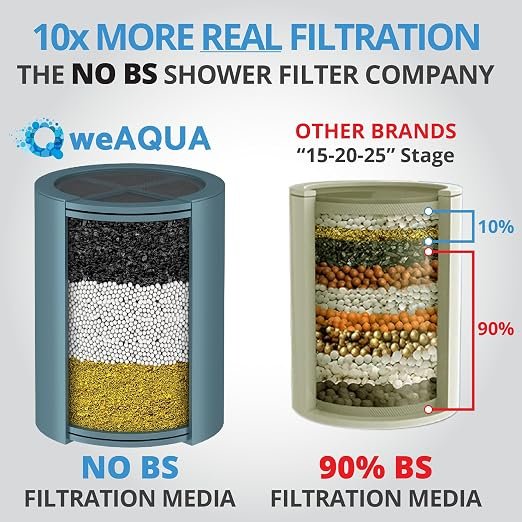
At SAR 145 for an AquaBliss or equivalent KDF-55 shower filter, the cost of removing chlorine from your daily shower is less than one month of imported skincare products. The impact on skin barrier function is more immediate and more sustained than any topical product applied to water-damaged skin.
The logic is straightforward: skincare products address symptoms on skin that is being damaged twice daily by chlorinated shower water. A shower filter addresses the root cause. Dermatologically, treating the cause before managing the symptoms is always the priority.
After the shower filter, if mineral-related issues persist — persistent breakouts, dry patches that do not respond to moisturiser, ongoing scalp problems — the next step is a water softener or a switch to bottled or RO-filtered water for rinsing your face and hair.
My full breakdown of the best shower filters tested on Saudi tap water is in my shower filter guide.
The Decision Table — What to Choose for Your Saudi Skin Problem
| Problem | Root cause | Solution | Estimated cost (SAR) |
|---|---|---|---|
| Tight, dry skin immediately after shower | Chlorine stripping skin oils | Shower filter (KDF-55) | 100-120 |
| Mineral film on skin — soap not rinsing clean | Calcium/magnesium deposits | Water softener or shower filter with softening stage | 70-80 |
| Persistent eczema or psoriasis flare-ups | Both chlorine and minerals | Shower filter first; water softener if symptoms persist beyond 6 weeks (dermatologist consult for children) | 145–800 + consultation if needed |
| Hair loss and scalp dryness | Chlorine and mineral buildup on scalp | Shower filter — hair-specific model with vitamin C stage | 50-60 |
| Overall skin dryness not responding to moisturiser | Ongoing barrier damage from shower | Shower filter as first step, water softener if persistent | 90-130 |
| Drinking water taste affecting hydration habits | High TDS and chlorine taste | Under-sink RO filter | 200-400 |
Practical Tips Summary
- Start with the shower, not the skincare shelf: The most common mistake Saudi expats make is spending SAR 200+ on imported moisturisers to treat skin damaged twice daily by chlorinated shower water. Fix the water source first.
- Shower filter lifespan in Saudi Arabia: Manufacturers rate filters at six months. In high-TDS Saudi water conditions, check or replace every three to four months. When the chlorine smell returns to your shower water, the filter media is exhausted.
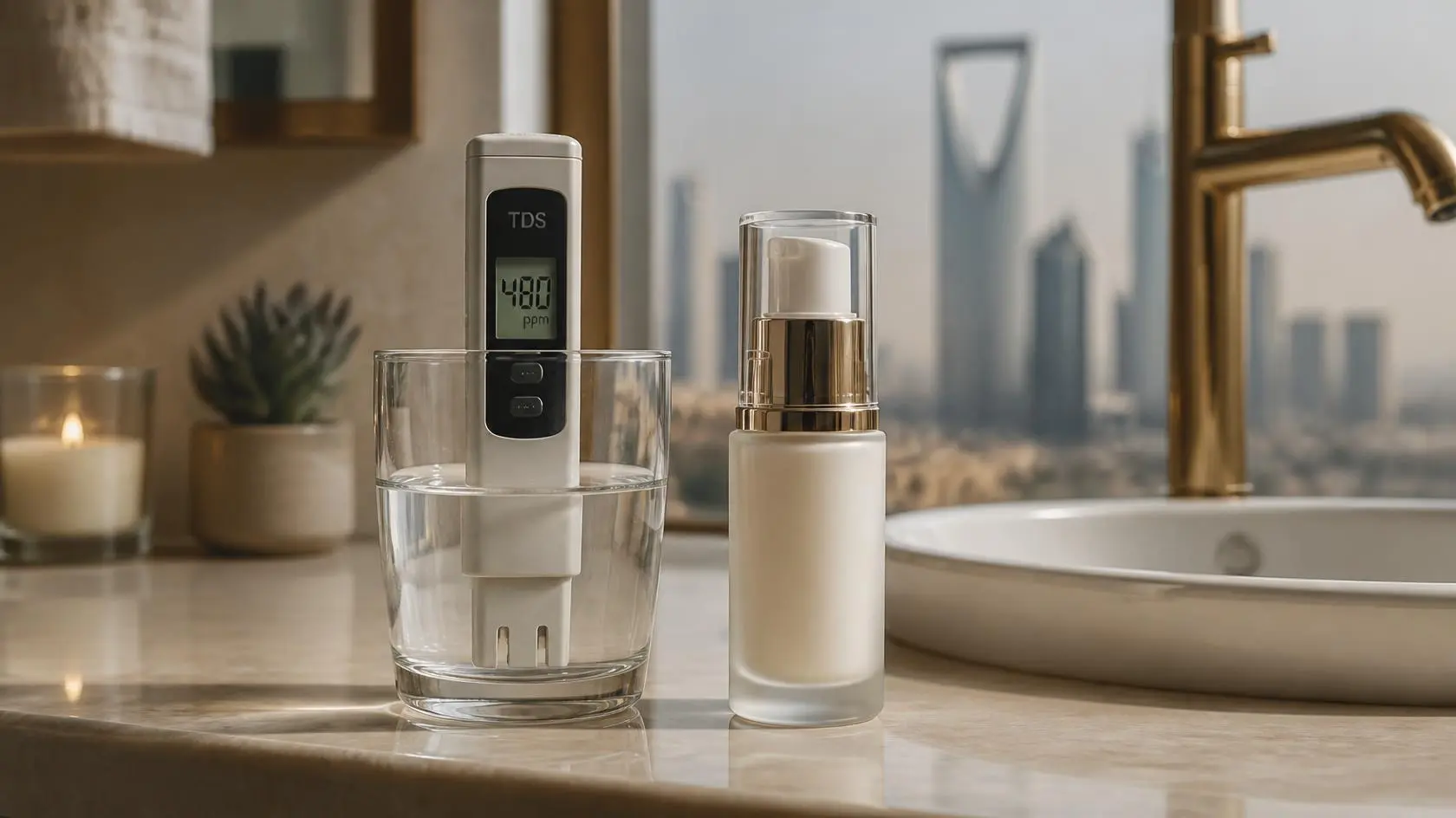
- Test your own water first: A TDS meter costs SAR 15 to 25 on Amazon.sa. Test your shower tap alongside your kitchen tap — the difference between the two tells you how much your building’s internal pipes are contributing to the problem over and above the mains supply.
- Children and eczema: Install the shower filter before escalating to prescription topical treatments. Environmental water quality modification is a recommended first-line intervention by paediatric dermatologists for eczema in hard water areas.
- Moisturise immediately after showering: Whether or not you have a shower filter installed, applying moisturiser within three minutes of exiting the shower — while skin is still damp — dramatically improves moisture retention. Saudi apartment air is extremely dry from constant AC use, which accelerates moisture loss from already-stressed skin.
- The softener sodium question: If you or a family member has cardiovascular concerns or is on a low-sodium diet, discuss water softening with your physician before installing a sodium-based ion exchange system.
Frequently Asked Questions
Riyadh tap water meets potability standards for safety — it is treated and disinfected before distribution. It is not dangerous in the sense of causing acute illness. However, the high chlorine load and high mineral content cause cumulative skin barrier damage with repeated exposure that dermatologists classify as a significant environmental factor in skin conditions like eczema, dryness, and acne. Safe to use does not mean optimal for skin health.
The clinical evidence for KDF and carbon shower filters reducing eczema symptoms is genuinely positive. People with eczema, psoriasis, and sensitive skin often report fewer flare-ups and less need for prescription treatments after switching to filtered shower water. The improvement is not instantaneous — allow four to six weeks of consistent use before evaluating. If symptoms persist beyond six weeks with a shower filter in place, a water softener addressing mineral hardness is the next intervention.
Yes — and many Saudi expats with sensitive skin or persistent facial acne do exactly this. Rinsing with low-TDS bottled water removes the mineral film that tap water leaves on the face after cleansing. The cost is manageable for facial use specifically — roughly 1 to 2 litres per day of dedicated facial rinsing water.
4. Is soft water or hard water better for hair in Saudi Arabia?
Soft water is significantly better for hair. The mineral deposits from hard water coat hair shafts, reduce elasticity, dull shine, and make hair feel rough regardless of conditioner use. Removing the mineral load through softening or high-stage shower filtration allows hair cuticles to lie flat, conditioner to penetrate properly, and natural oils to function as they should. Most of the hair loss expats experience in Saudi Arabia is caused by this mineral coating combined with chlorine damage to the scalp — it is recoverable with shower filtration.
The key distinction is timing. If skin feels tight and uncomfortable specifically after showering — not just generally during the day — the water is the primary cause. If skin is dry throughout the day regardless of shower timing, the low-humidity AC environment is a contributing factor alongside the water. Both can coexist. A shower filter addresses the post-shower tightness; a humidifier addresses the ambient dryness. My humidifier guide for Saudi dry AC air covers the environmental side.
Extra Home and Danube Home both stock shower filters in Riyadh — the Al Olaya and Malaz branches typically carry two to three models. The selection is narrower than Amazon.sa and prices are SAR 20 to 40 higher for comparable quality. For the specific KDF-55 models tested in my shower filter guide, Amazon.sa remains the better option for both range and price.
Read More: https://tabaix.com/