Moving to Saudi Arabia as an expat is a massive logistical challenge, but nothing causes more stress, tears, and anxiety than trying to relocate your family pet.
Whether you are flying into King Khalid International Airport in Riyadh or King Abdulaziz in Jeddah, the rules for bringing cats and dogs into the Kingdom are incredibly strict. Between securing the Ministry of Environment, Water and Agriculture (MEWA) import permit, getting the Rabies Titer test, and navigating airline policies, it feels like a monumental task.
However, the absolute biggest point of failure for most expats happens right at the check-in counter: The Crate.
Airlines like Saudia, Emirates, and Qatar Airways are unforgiving when it comes to pet travel gear. If your pet carrier does not meet the exact International Air Transport Association (IATA) specifications—if it lacks the correct ventilation, has plastic bolts instead of metal, or is slightly too small—the airline will deny boarding to your pet immediately.
Here is the unfiltered expat guide to flying your pets into Saudi Arabia, the hidden paperwork “hacks” for dogs, and the exact airline-approved pet carriers and heavy-duty cargo crates you must buy to guarantee a safe journey.
1. The Saudi “Guard Dog” Paperwork Hack
Before you even buy a crate, you need to understand Saudi Arabia’s specific laws regarding importing dogs.
Unlike cats, which are generally accepted as standard pets, the Kingdom’s official regulations state that dogs are generally only allowed to enter the country if they serve a specific purpose. If your paperwork lists your Golden Retriever or Poodle simply as a “family pet,” your MEWA import permit may be rejected.
- The Solution: When filing your paperwork and getting your vet’s health certificates, your dog must be officially classified as a “Guard Dog,” “Hunting Dog,” or “Service/Seeing-Eye Dog.” This applies regardless of the breed or size. Most expat relocation agencies automatically classify family dogs as “Guard Dogs” on the official import paperwork to ensure a smooth customs clearance in Riyadh or Jeddah.
- (Note: Certain aggressive breeds like Pit Bulls, Rottweilers, and Mastiffs are strictly banned from entering the Kingdom under any classification).
2. In-Cabin Travel: Flying with Cats on Saudia
If you are relocating with a small cat, you have a massive advantage: Saudia Airlines (SV) allows cats to fly with you directly inside the passenger cabin, provided they meet strict weight and size limits.
- The Weight Limit: The total weight of the cat and the carrier combined cannot exceed 5 kg (11 lbs).
- The Carrier Rules: Your cat must stay in the carrier for the entire flight, and the bag must fit completely under the seat in front of you. The absolute maximum dimensions allowed by Saudia for in-cabin carriers are 52.5 cm x 32.5 cm x 40 cm (21″ x 13″ x 16″).
The Best Airline-Approved Pet Carrier (Soft-Sided)
Do not use a hard plastic box for in-cabin travel; they are rigid and incredibly difficult to shove under an airplane seat. You need a premium, soft-sided carrier with a flexible wire frame.
- What to look for: Look for a carrier with heavy-duty mesh on all four sides for maximum ventilation, locking zippers (so your cat cannot push it open mid-flight), and a waterproof, leak-proof bottom pad in case of accidents during the long flight to the Kingdom.


3. Cargo Travel: Flying with Dogs (The IATA Crate Rules)
Unless they are an official registered service animal, dogs are strictly forbidden from the passenger cabin on flights into Saudi Arabia. They must travel as Checked Baggage or Manifest Cargo in the climate-controlled hold of the aircraft.
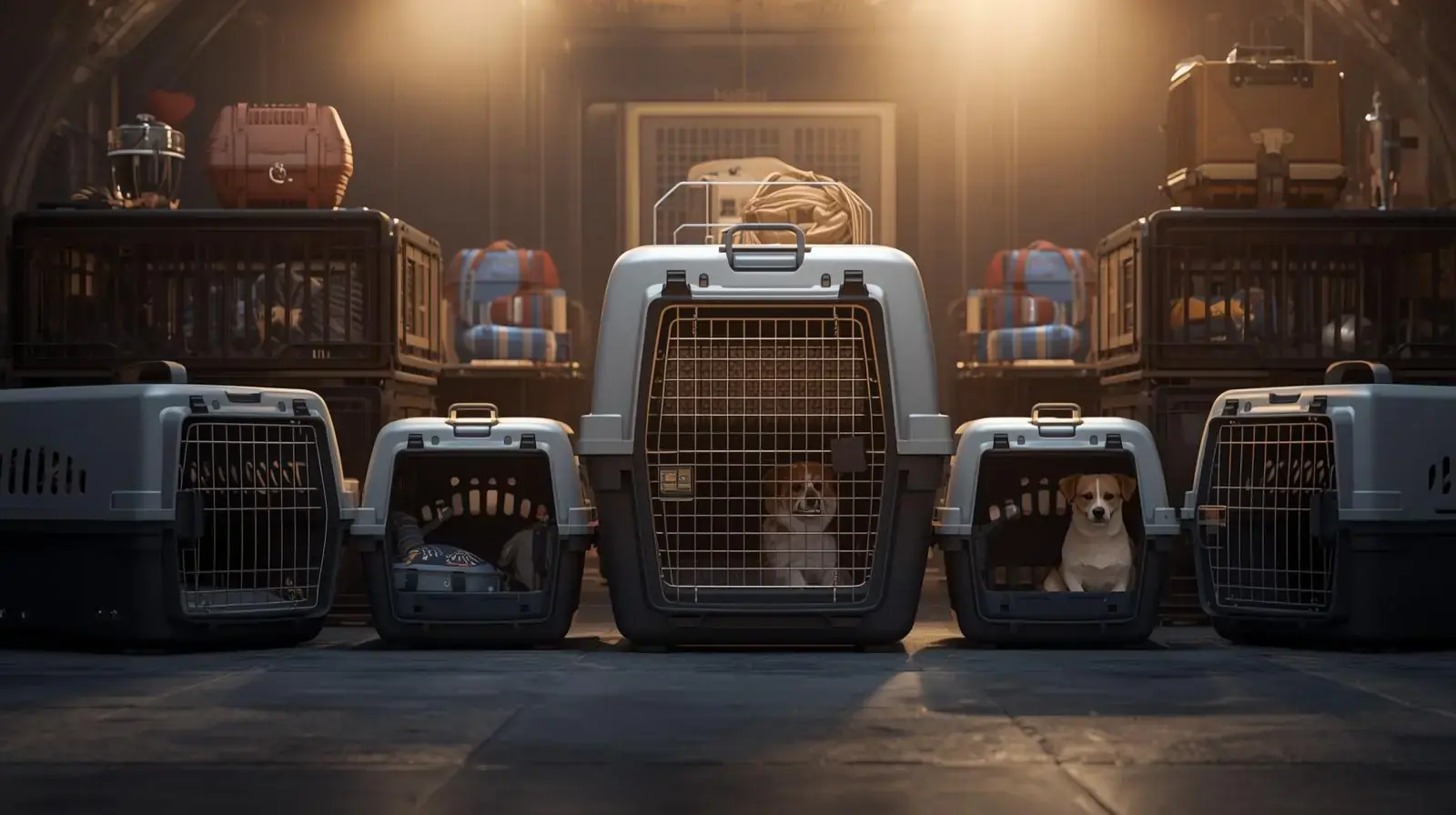
This is where the rules become incredibly strict. You cannot buy a cheap wire cage or a flimsy plastic box from a local pet store. Your dog must travel in an IATA-Compliant Hard Crate. If the gate agent sees any of the following flaws, your dog will be denied boarding:
- Plastic Fasteners: The top and bottom halves of the crate CANNOT be held together by plastic clips or dials. They must be secured by actual steel nuts and bolts.
- Size Restrictions: Your dog must be able to stand up completely without its ears touching the roof, turn around 360 degrees freely, and lie down in a natural position.
- Ventilation & Locking: The crate must have metal grate ventilation on at least three sides (four for international flights), and the front door must have a spring-loaded metal lock that the dog cannot manipulate.
The Ultimate Heavy-Duty Cargo Crate
When your pet is being handled by baggage loaders and placed in an aircraft hold, you want the strongest plastic possible. Brands like Petmate (specifically their Sky Kennel series) are the gold standard for international cargo travel.
- The Hack: Always order a crate that is one size larger than you think you need. Airline staff will rarely penalize you for giving a dog too much room, but they will aggressively reject a crate that looks even slightly cramped.


4. Essential Pet Travel Gear for the Flight
A 14-hour flight from the US or Europe to Saudi Arabia is terrifying for an animal. You are not allowed to sedate your pets (airlines will reject heavily tranquilized animals due to respiratory risks at high altitudes). Instead, you must equip the crate properly.
Attach-on Food and Water Bowls
Airlines require that food and water bowls be securely attached to the inside of the metal crate door. They must be accessible from the outside so airport cargo staff can refill the water during layovers without ever opening the crate door.

- 【Novel Design】The dog crate bowls are special pumpkin shape can be mounted directly onto the cage, one for water and one…
- 【2-in-1 Design】Crate food and water bowl is made of stainless steel inner bowl and plastic outer bowl. Stainless steel b…
- 【Easy To Clan】Removable hanging stainless steel crate bowls for small dogs are easy to clean. No longer worry about the …
Absorbent Crate Pads (No Blankets)
Do not put thick, fluffy blankets inside a cargo crate. If the dog gets anxious and chews the blanket, it poses a choking hazard, and airline staff may remove it. Instead, line the bottom of the crate with ultra-absorbent, medical-grade puppy training pads. Since no one will clean the crate mid-flight, these pads will absorb urine and keep your dog dry and comfortable until you land in Riyadh.


Live Animal Stickers and Zip Ties
Your crate must be clearly labeled. Buy a pack of bright green “LIVE ANIMAL” stickers and place them on all four sides of the hard crate. Additionally, bring a pack of heavy-duty industrial zip ties to the airport. Once the TSA or security agents inspect the crate, you will use the zip ties to secure the metal door shut so it cannot accidentally pop open during turbulence.
Frequently Asked Questions (FAQs)
Fees vary heavily based on your departure city and whether the pet is in the cabin or cargo. Generally, Saudia charges roughly $100 USD for an in-cabin cat, and $300 USD or more for a dog traveling as checked baggage on international routes. Always call the airline directly after booking your ticket to reserve your pet’s spot, as there is a strict limit on how many animals are allowed per flight.
Usually, no. If you have perfectly executed all the paperwork—including the MEWA import permit, a valid Rabies Titer test, an ISO-compliant microchip, and a health certificate endorsed by your home country’s government (like the USDA in America or DEFRA in the UK)—your pet will clear customs at the airport and go straight home with you. Quarantine is typically only enforced if your paperwork is missing or invalid.
Most western expat compounds in Riyadh, Jeddah, and Dhahran are incredibly pet-friendly. They often have dedicated dog-walking paths and plenty of stray compound cats! However, if you are renting a standard apartment in the city, you must explicitly ask your landlord for permission, as many local Saudi landlords prefer not to have dogs inside their buildings.
Conclusion
Relocating to Saudi Arabia with your pets is an expensive, paperwork-heavy process, but having your furry best friend waiting for you in your new Riyadh apartment makes it all worth it. Do not leave their safety to chance. Skip the cheap pet store carriers, invest in an IATA-approved cargo crate with steel bolts, buy the right attachable water bowls, and ensure your paperwork says “Guard Dog.” Prepare the crate properly, and your pet will be safely exploring the Arabian desert with you in no time.
Are you preparing your apartment for your pet’s arrival? The Saudi water can be harsh on their skin too. Read our guide on The Best Shower Filters in Saudi Arabia to keep your pet’s coat healthy when bathing them!