The visa is the first real step of Umrah. Before the flights, before the hotel, before the ihram — the visa decides whether the trip happens at all. It is also the step where people waste the most time, because the rules depend on your passport, they change more often than any other part of the journey, and half the advice online is out of date.
I live in Riyadh, and I have watched friends and family get this wrong in every way it can be got wrong: booking a non-refundable flight before the visa, paying an agent for a visa they could have applied for online in a few minutes, and landing in Jeddah assuming a visa would be waiting for them at the airport. This guide is the one I wish they had read first.
It covers the three ways to get an Umrah visa — the Nusuk e-visa, visa on arrival, and a licensed travel agent — who qualifies for each, the documents you actually need, how long it takes, what it costs, and what to do when something goes wrong. It also has a full section for travellers from Pakistan, because that is where most of my readers are coming from and the Pakistan route has its own quirks.
One rule runs through the whole post: visa fees and rules change. I am not going to quote you a fee that could be out of date by the time you read this. Every fee mentioned here is marked for a live check on Nusuk (nusuk.sa) — the official Saudi platform — before you pay anything. If a number in this guide and a number on Nusuk disagree, Nusuk is right.
How this guide was checked — last verified 11 November 2026. This guide was checked against the official Saudi platforms on 11 November 2026: the Nusuk e-visa route, visa-on-arrival eligibility and fee, and the Pakistan route. Visa fees and rules change often, so this guide deliberately quotes no fee figure — check the live fee on Nusuk before you pay anything. If a number here and a number on Nusuk disagree, Nusuk is right. Written from Riyadh by Tayyab Ali, founder of Tabaix Enterprises. I live in Saudi Arabia and have watched friends and family get the visa step wrong — this is the guide I wish they had read first.
Who Needs an Umrah Visa?
Almost everyone travelling to Saudi Arabia for Umrah needs a visa of some kind. The question is never “do I need a visa” — it is “which visa, and which route is open to my passport.”
There are three groups of travellers, and knowing which group you are in saves you from the most common mistake of all: applying through the wrong route.
Citizens of GCC countries do not need a visa. If you hold a passport from the United Arab Emirates, Qatar, Kuwait, Bahrain or Oman, you can enter Saudi Arabia without a visa and perform Umrah. You travel on your national ID or passport, and the visa question does not apply to you. This is the simplest group to be in.Travellers from countries with an online visa route. Many nationalities can apply for an Umrah e-visa online through Nusuk. If your passport is in this group, the e-visa is almost always the cheapest and fastest route, and you should try it before you pay anyone else. The exact list changes, so the check takes two minutes on nusuk.sa: select your nationality and it will show you the routes open to you.
Travellers who need an agent or a visa on arrival. If the e-visa is not open to your passport, the two remaining routes are a licensed travel agent in your country, who arranges the visa with your flights and hotels as a package, or a visa on arrival at a Saudi airport if you qualify for it. The visa-on-arrival route has its own conditions, and it only fits a specific group of travellers — the section below explains who.
A fourth route exists that people often forget: a Saudi tourist visa also allows Umrah. Saudi Arabia has allowed tourists to perform Umrah on a tourist visa since the tourist visa was introduced. If the Umrah e-visa does not fit you, check whether a tourist e-visa is open to your nationality — it may be the simpler route. The rules for this depend on your passport, so check the current wording on the official visa site before you rely on it. Do not assume a tourist visa and an Umrah visa are identical in every detail; the stay rules and the validity are different, and those details matter for your flights.
Whichever group you are in, one thing is the same for everyone: your passport must be valid for at least six months from the date you enter Saudi Arabia. This is the single most common reason visas are refused, and it is the easiest to prevent. Check your passport’s expiry date before you do anything else. If it has less than six months left, renew it first — no visa route will save a passport that is about to expire.
The Three Ways to Get an Umrah Visa
There are exactly three ways to get a visa for Umrah. Every offer you see online, every agent’s package, every “express service” is one of these three routes with a different price on top.
1. The Nusuk e-visa — apply online yourself. You apply on nusuk.sa, upload your documents, pay the fee online, and the visa arrives by email. This is the route to try first if it is open to your nationality. It is the cheapest, because there is no middleman, and the fastest, because there is no agent’s queue. The step-by-step below walks through it exactly.
2. Visa on arrival — at the airport in Saudi Arabia. If you already hold a valid visa from the United States, the United Kingdom or a Schengen country, you may be eligible to get your Saudi visa at the airport when you land. You do not apply in advance. You go to the visa-on-arrival counter, show your documents, pay the fee by card, and the visa is issued there. It sounds easy, and for the people it fits, it is — but the conditions are strict, and arriving without meeting them means you do not board your return flight with a visa. The full conditions are in the visa-on-arrival section below.
3. A licensed travel agent — the package route. A travel agent licensed for Umrah in your country arranges the visa, and usually bundles it with flights and hotels. This is the standard route for travellers from Pakistan and from many other countries where the e-visa is not open. It costs more than applying yourself, because you are paying for the agent’s work and the package, but for many people it is the only route that exists, and a good agent takes the paperwork off your hands entirely. The danger is the bad agent — the section on mistakes below explains how to spot one.
Before you choose, do the two-minute check on Nusuk. Open nusuk.sa, select your country, and see which routes it offers you. That one check tells you whether route one is open to you, and it stops you paying an agent for something you could have done yourself.
Umrah E-Visa on Nusuk — Step by Step
Nusuk is the official Saudi platform for Umrah. It is where you check your route, apply for the e-visa, manage your Umrah permit and handle your bookings. The e-visa application itself is straightforward. Here is how it works, step by step.
Step 1 — Open Nusuk and select your nationality. Go to nusuk.sa and choose your country from the list. This is the step that decides everything else: it shows you whether the e-visa is open to your passport, what the fee is, and what documents are required. Do this before you book a flight or a hotel, and do it on the official site — not on a website that looks like Nusuk.
Step 2 — Create your account. You will need an email address you can actually open, because the visa is sent to it. Use an email you check every day, not an old address you never open. Create the account with your name exactly as it appears on your passport — letter for letter. A name mismatch between your visa application and your passport is one of the most common reasons applications get delayed.
Step 3 — Fill in your details. The form asks for the details on your passport: full name, passport number, date of birth, nationality, and your travel dates. Fill it in slowly. Every letter matters, and the most common error in the whole process is a typo in the passport number or the name. Check each field against the passport itself, not from memory.
Step 4 — Upload your documents. You will need a recent photograph and a scan of your passport’s information page. The photograph rules are strict and boring: a plain background, your face clearly visible, no sunglasses, no hat, and taken recently. A photo that does not meet the rules is the second most common reason applications are sent back. Take a fresh photo for this — do not reuse a ten-year-old photo from another visa.
Step 5 — Pay the fee. The fee is paid online by card on the Nusuk platform. The amount depends on your nationality and the visa type, and it is shown to you before you pay. Check the amount on the screen against the fee listed on Nusuk before you confirm — and remember that the fee is the part of this process that changes most often, so never trust a fee you read in a blog post, including this one.
Step 6 — Wait for the decision, then check your email. Most e-visa decisions come within a few working days. Some come faster. When the decision arrives, it comes by email, and the visa itself is linked to your passport number. Print a copy of the visa and keep it with your passport, and keep a copy on your phone as well. The airport and the hotel both ask for it.
If your application is sent back for a correction, do not panic. It usually means one document did not meet the rules — most often the photograph, or a detail that does not match the passport. Fix exactly what was flagged, and resubmit. Do not submit a second, brand-new application while the first one is still open, because two open applications with the same passport number cause confusion and delay. Fix the one you have.
One more thing about Nusuk: download the Nusuk app on your phone before you fly. It is where you manage your Umrah permit and your bookings in Saudi Arabia, and having it set up before you land saves you from hunting for links at the airport. Check that the app is signed in and working while you are still at home.
Umrah Visa Requirements and Documents
The documents for an Umrah visa are short. There are not many of them, and that is exactly why people get them wrong — they assume a short list means a careless application.
A passport valid for at least six months. This is the first requirement and the one that refuses the most applications. The six months are counted from the date you enter Saudi Arabia, not from the date you apply. If your passport expires in five months and you plan to travel in two, renew the passport first. Nothing else in this list matters if the passport fails this check.
A recent photograph. A passport-style photo, taken recently, with a plain white background, your face fully visible, no sunglasses, no head covering except for religious reasons. The photo is checked by the system, and a photo that does not meet the rules is sent back. Take a new photo at a studio that does visa photos — they know the rules, and it costs very little.
Your travel details. Your planned dates, your flight booking and your hotel booking. For the e-visa you may not need to upload the hotel booking itself, but you will need the details, and your agent — if you use one — will need the booking to arrange the visa. Keep your bookings after you make them. Do not cancel a hotel booking that your visa application refers to.
Proof of your return or onward journey. A return ticket, or a ticket onwards from Saudi Arabia. A one-way ticket is a problem: it looks like you do not intend to leave, and it is one of the things that gets applications and arrivals questioned. Always book a return.
Your name, spelled exactly as on your passport. This is not a separate document, but it behaves like one. Your visa, your flight ticket and your hotel booking must all carry the same spelling of your name. If your passport has a middle name, use it everywhere. If your ticket drops a name that your passport has, fix the ticket. The mismatch that causes the most trouble at the airport is a booking made in a short form of a name — a nickname, a single name where the passport has two — and the officer at the desk cannot match them.
For travellers applying through an agent: your agent will ask for the passport and the photograph, and usually for your booking details as well. A licensed agent asks for these and nothing else — no bank statements, no property papers, no sponsor letters. If an agent asks for documents that have nothing to do with a visa, or for your original passport to be kept for weeks without a receipt, that is a warning sign. The section on common mistakes explains how to check whether an agent is licensed.
For women and children: children need their own passport and their own visa — a child cannot travel on a parent’s passport. Women travelling for Umrah follow the same visa process as men. The old rule that required a male guardian for women under a certain age for Umrah has been relaxed — women may now travel for Umrah without a mahram — but the rules for this have changed more than once, so confirm the current position on Nusuk or with your agent before you travel. Do not rely on what someone told you three years ago.
Health requirements: Saudi Arabia sets health requirements for pilgrims, and they change with the season and with global health conditions. Check the current requirements on Nusuk or the Saudi health ministry’s guidance before you travel, and keep whatever health document is asked for with your passport. This is another detail that changes — a blog post from last year is not a reliable source for it.
How Long Does It Take? Processing Time and Validity
The two questions everyone asks after the documents are: how long will it take, and how long is the visa valid for. Both answers depend on your route, and both are reasons to apply early.
Processing time for the Nusuk e-visa. Most online applications are decided within a few working days. Some come back faster than that. But “most” is not “all” — at peak times, especially in the weeks before Ramadan, applications take longer, and an application sent back for a document correction restarts the clock. The honest rule is this: apply at least two weeks before you fly, and more if you are travelling in Ramadan. An application submitted the day before a flight is a gamble, and it is a gamble you do not need to take.
Processing time through an agent. An agent’s timeline includes their own queue as well as the embassy’s. Agents usually count in days, not hours, and the exact time depends on how many applications they are handling and on the season. Ask your agent for the timeline in writing before you pay — a date, not a vague promise — and ask what happens if the visa is delayed past your flight. A good agent answers both questions plainly.
Visa on arrival. There is no processing time, because the visa is issued at the airport when you land. The time cost is the queue at the visa counter, which is longer when several flights land together. It is still worth having every document ready in a folder you can open in seconds — the counter moves much faster for the traveller who has everything in hand.
Validity — how long the visa lasts. An Umrah e-visa is normally valid for a stay of up to 90 days, and it is usually a single-entry or multiple-entry visa depending on the type issued. Since November 2025, the visa must also be used to enter Saudi Arabia within 30 days of it being issued, or it is cancelled automatically — the 90 days is the stay allowed once you are inside, not the window to travel. The exact validity is printed on your visa. Read it when it arrives, and do not assume it from what someone else’s visa said. Two visas issued in the same week can have different terms, because the terms depend on the visa type and the nationality. What matters for your trip is not the maximum stay the visa allows, but the dates you actually booked: your return flight must fall inside the visa’s validity, and your hotel booking must match the trip you told the application about.
If your plans change after the visa is issued. A visa is issued for a specific trip. If you change your travel dates by a few days, the visa usually still covers it, as long as you stay inside its validity. If you change the trip entirely — different month, different person travelling — do not assume the old visa still works. Check on Nusuk or ask your agent before you fly on a visa that was issued for a different plan.
Umrah Visa Price and Cost — What You Actually Pay
This is the section people come to this post for, so I will be straight with you: I am not going to put a price here. Visa fees change, and a price written in a blog post goes stale while the post is still being read. What I will do instead is explain what the fee is made of, what changes it, and exactly where to check the live number before you pay.
What the Umrah visa fee covers. The fee you pay on Nusuk is the visa fee itself. In most cases it also includes the mandatory health insurance that Saudi Arabia requires for visitors, because the insurance is bundled into the visa application rather than sold separately. That is why the total you see on the payment screen is one number, not a list of small charges. If an agent quotes you a visa price, ask them to break it down in writing: the visa fee, the insurance if it is separate, and their service charge. If they cannot break it down, you are not looking at a price — you are looking at a guess.
What changes the price. Three things. First, your nationality — the fee is not the same for every passport. Second, the route — an e-visa bought directly on Nusuk and a visa arranged by an agent are different prices, because the agent adds their service charge and usually bundles flights and hotels into the total. Third, the season — an agent’s package price in Ramadan is not the same as in a quiet month, because the flights and hotels inside the package cost more. The visa fee itself does not change with the season, but the package around it does, and package prices are where people get surprised.
Where to check the live fee. Nusuk, before you pay anything. Open nusuk.sa, select your nationality, and the fee is shown on the application screen before you confirm the payment. That is the number that matters, and it is the only number I trust for this. The same applies to the visa-on-arrival fee at the airport: it is printed at the counter, and you pay it by card, so you will see the exact amount before you pay.
What a package really costs. If you travel with an agent, the price you are quoted is almost never the visa alone. It is the visa, the flights, the hotel, the transport between Jeddah and Makkah, and the agent’s service charge, in one number. Ask for each part separately before you pay. The question that saves the most money is a simple one: “How much is the visa itself, and how much is everything else?” An agent who answers plainly is an agent you can work with. An agent who will not answer is an agent you should walk away from.
The cheapest route is usually the e-visa. If the e-visa is open to your nationality, it is the cheapest way to get an Umrah visa, because there is no middleman. The difference between the e-visa fee and an agent’s package is not small — it is the agent’s service charge and the package’s hotel and flight margins. If you can book your own flights and hotels, the e-visa route saves you real money. If you cannot, or you prefer the package, that is a fair choice — but make it knowing what the package costs, not guessing.
Visa on Arrival — Who Qualifies
and How It Works
Visa on arrival is the easiest Umrah visa route for the people it fits, and a trap for the people who assume it fits them. Here is exactly who qualifies and how it works.
Who qualifies. At the time of writing, visa on arrival at a Saudi airport is open to travellers who already hold a valid visa from the United States, the United Kingdom, or a Schengen country. It is also open to permanent residents of those countries, and to holders of a valid US, UK or EU residence permit. The key word is “valid” — an expired visa does not count, and a visa that has never been used usually does not count either. The rule as it is generally applied is that the US, UK or Schengen visa must have been used at least once to enter the country that issued it, and it must still be valid on the day you land in Saudi Arabia. This is the condition people most often get wrong, so check the current wording on the official visa site before you fly. If your US visa has never been used, do not assume visa on arrival will work. Schengen visa holders should also note this: since April 2026, Schengen countries record entries digitally and no longer stamp passports, while the official visa-on-arrival rule still asks for a physical entry stamp from the issuing country — so confirm in advance that a digital entry record will be accepted before you rely on this route.
Where it is issued. At the international airport where you land in Saudi Arabia — Jeddah for most Umrah travellers, Riyadh or Dammam for others. There is a visa-on-arrival counter at immigration. You do not apply before you fly. You arrive, you go to the counter with your documents, and the visa is issued there.
What to have ready. Your passport (valid for at least six months), your valid US, UK or Schengen visa, your return or onward ticket, and your hotel booking. Also have a bank card — the fee is paid by card at the counter, and cash is not always accepted. Keep all of it in one folder you can open in seconds. The counter moves fast for the traveller who has everything ready and slowly for the traveller who is searching through a bag.
What it costs. The fee is charged at the counter and it includes the mandatory health insurance. Check the live fee on the official visa site before you fly, because this is another number that changes — do not take it from this post.
How long it lasts. A visa issued on arrival is normally a multiple-entry visa valid for a year, with each stay allowed up to 90 days. Read the visa when it is issued and check the dates before you leave the counter. If anything on it looks wrong, say so at the counter, not at the hotel.
Who should NOT rely on visa on arrival. Anyone who does not hold a valid US, UK or Schengen visa or residence permit. Anyone whose qualifying visa has expired. Anyone whose qualifying visa has never been used. And anyone who cannot afford to be turned back — if your trip is a once-in-a-lifetime journey with a family, book the e-visa or the agent route in advance and remove the doubt. Visa on arrival is a convenience for people who already qualify. It is not a fallback for people who do not.
Umrah Visa from Pakistan

This section is for the readers this site is written for. Most of the Umrah travellers reading Tabaix are coming from Pakistan, and the Pakistan route has its own shape. Here is how it works, honestly.
The standard route from Pakistan is a licensed agent. Most Pakistani Umrah travellers go through a travel agent licensed for Umrah, who arranges the visa and bundles it with flights and hotels. This is how the system works in practice, and a good agent makes it easy. The agent asks for your passport and a recent photograph, and handles the application. They also arrange the flight, the hotel, and the transport from Jeddah to Makkah, so you land with everything settled.
How to choose an agent. This is the part that matters most, because a bad agent in Pakistan is the most expensive mistake in this whole post. A licensed agent has a licence number from the relevant authority, an office you can visit, and a written package: what is included, what the timeline is, and what the price is, all on paper. Ask for all three before you pay. Ask for the visa timeline in writing — a date, not “inshallah next week.” Ask for the hotel name and the distance to the Haram in writing, not “near Haram.” Ask what happens if the visa is delayed past your flight. A good agent answers all of it plainly, and will show you the previous groups they sent. An agent who works only on WhatsApp, takes full payment in advance with no written package, or cannot name the hotel is an agent to avoid.
What the agent will ask you for. Your passport (valid for at least six months), a recent photograph, and your travel dates. Sometimes a copy of your national identity card as well. That is the normal list. An agent who asks for bank statements, property papers, sponsor letters, or your original passport to be kept for weeks without a receipt is asking for things a visa application does not need. Keep a photocopy of everything you hand over, and get a receipt for your passport with the date it will be returned.
How long it takes from Pakistan. Through an agent, the visa timeline is counted in days, not hours — the agent has their own queue as well as the embassy’s, and the season matters. Ask for the date in writing. Apply early: a month before your flight is comfortable, two weeks is the minimum you should accept, and anything less than a week before the flight is a risk you should not take. In Ramadan, everything takes longer — the agents are handling more people, the flights are full, and the hotels near the Haram are booked out. If you are travelling in Ramadan, apply as early as you can.
The fee from Pakistan. The visa fee itself is set by the Saudi authorities, and the agent adds a service charge on top of it. What you are quoted is usually the whole package — visa, flights, hotel, transport — in one number. Ask for the breakdown in writing: the visa fee, the agent’s service charge, and the flights and hotels separately. The visa fee is the part that changes, so check it live on Nusuk even if you are going through an agent. If the agent’s visa fee and Nusuk’s fee do not match, ask why before you pay.
A note on cost. Flights from Pakistan to Jeddah are usually the biggest cost of the whole trip, and they rise sharply in Ramadan and in the school holiday weeks. Book the flight early, and check who you are flying with — the budget airlines and the full-service airlines land at different terminals in Jeddah, and that changes your arrival. The flight is a bigger line in your budget than the visa. Do not let the visa paperwork distract you from booking the flight at the right time.
Children and family groups. Children need their own passport and their own visa — a child cannot travel on a parent’s passport. If you are travelling as a family, the agent handles all the applications together, but each person still needs their own documents. Make sure every passport in the family has six months of validity, including the children’s. A child’s passport with five months left will refuse the whole family’s timeline just as surely as an adult’s will.
Common Mistakes That Delay or Refuse a Visa
Almost every refused or delayed Umrah visa comes from the same short list of mistakes. None of them is hard to avoid. All of them are expensive to fix after the fact.
Applying too late. This is the most common one. The application is submitted the week of the flight, the decision takes a few working days, a document gets sent back, and suddenly the flight is tomorrow and the visa is not ready. Apply at least two weeks before you fly. A month is comfortable. A week is a risk. A day is not a plan.
A passport with less than six months left. The rule is six months from the date you enter Saudi Arabia. People check the expiry date at the time they apply and forget that the trip is two months later. Count the six months from your arrival date, not from today. Renew early — a passport renewal is cheap and simple compared with a refused visa.
A photograph that does not meet the rules. The photo must be recent, with a plain white background, your face fully visible, no sunglasses, no hat. A cropped photo from a group picture, a photo with a coloured background, or a photo that is years old will be sent back. Take a new photo at a studio that does visa photos. It takes ten minutes.
A name that does not match the passport. Your visa, your flight ticket and your hotel booking must all carry the same spelling of your name, exactly as it appears on the passport. The mismatch that causes the most trouble is a booking made in a short form of a name — a single name where the passport has two, or a nickname instead of the full name. Check all three documents against the passport before you pay for any of them.
Booking a non-refundable flight before the visa. Never book a flight you cannot change or refund until the visa is approved. If the visa is delayed, the flight is lost, and the money is gone. Book a flight you can move, or wait for the visa first. The flight prices you save by booking early are not worth anything if the visa does not arrive.
A one-way ticket. A return or onward ticket is part of the requirement. A one-way ticket raises the question of whether you intend to leave, and it is one of the things that gets both applications and arrivals questioned. Always book a return.
Trusting an unlicensed agent. A licensed agent has a licence number, an office you can visit, and a written package. An unlicensed agent works only on messages, takes full payment in advance, and cannot name the hotel. If something goes wrong with an unlicensed agent, there is no one to complain to and no licence to check. The money is gone. Ask for the licence number and the written package before you pay a single rupee.
Applying on a website that is not Nusuk. There are websites that look like Nusuk and charge a fee to “process” your application. The official platform is nusuk.sa. Check the address in your browser before you type your passport number into any form. If a site asks for a service fee before showing you the application, close it.
Forgetting the hotel booking. Your visa application refers to your trip, and your trip includes where you are staying. Keep the hotel booking after you make it. Do not cancel a booking that your application refers to, and keep a printed copy of the booking with your passport. The hotel asks for it too.
Submitting two applications at once. If your application is sent back for a correction, fix that application and resubmit it. Do not start a second, brand-new application while the first is still open. Two open applications with the same passport number cause confusion and delay, and they make the second one slower, not faster.
If Your Visa Is Refused or Delayed
A refusal is not the end of the trip. Most refusals have a reason, and most reasons can be fixed. What you do next depends on the reason.
Read the refusal properly. If the application was refused on Nusuk, the platform or the email will give you a reason. Read it carefully before you do anything. Most refusals give one of a few reasons: a passport with insufficient validity, a photograph that did not meet the rules, a detail that did not match the passport, or missing documents. Each of those has a specific fix. Guessing at the reason and re-applying with the same error is the fastest way to be refused twice.
Fix exactly what was flagged, then re-apply. If the photograph was the problem, take a new one. If the passport validity was the problem, renew the passport first. If a name did not match, correct the spelling and check it against the passport. Then re-apply with the corrected documents. A refusal does not ban you from applying again — it tells you what to fix.
If your visa is delayed, not refused. A delayed application is usually still being processed. Check the status on Nusuk before you do anything else. If the status has not changed for several working days, and your flight is close, contact your agent if you used one, or contact the platform’s support. Do not submit a second application while the first is still processing — it slows both of them down.
If you used an agent, make the agent work. The agent took your money and your documents. If the visa is delayed or refused, the agent owes you the reason and the next step, in writing. Ask for both. If the agent cannot give you the reason, or asks for more money to “fix” a refusal they cannot explain, that is a sign to stop paying and take the case to the embassy or consulate yourself.
If the Umrah visa route does not work, check the tourist visa. A Saudi tourist e-visa also allows Umrah, and it is open to nationalities that the Umrah e-visa is not always open to. If the Umrah route has failed you, check whether the tourist e-visa is open to your passport — it may be the simpler route. The rules for this depend on your nationality and they change, so check the current wording on the official visa site before you rely on it.
If nothing works, ask the embassy or consulate. The Saudi embassy or consulate in your country is the final place to ask. They can tell you the current requirements for your nationality and whether your case has a route you have not tried. Go there with your passport, your refusal notice and your documents — not with a story. The people at the counter can help when they can see exactly what happened.
Do not fly without a visa. This sounds obvious, and it is the mistake people make when they are desperate. If the visa is not approved, do not fly to Jeddah hoping the airport will fix it. A traveller who arrives without a visa and without qualifying for visa on arrival will be sent back on the next flight, at their own expense, and the return ticket does not cover that. Change the flight instead. A changed flight is cheaper than a refused entry.
After the Visa: What to Do Next
The visa is approved. Now the trip becomes real. Here is what to sort out before you fly.
Check the visa itself. Read the dates on it. Check the name, the passport number and the validity. If anything is wrong, fix it now — not at the airport. Print a copy and keep it with your passport, and keep a copy on your phone.
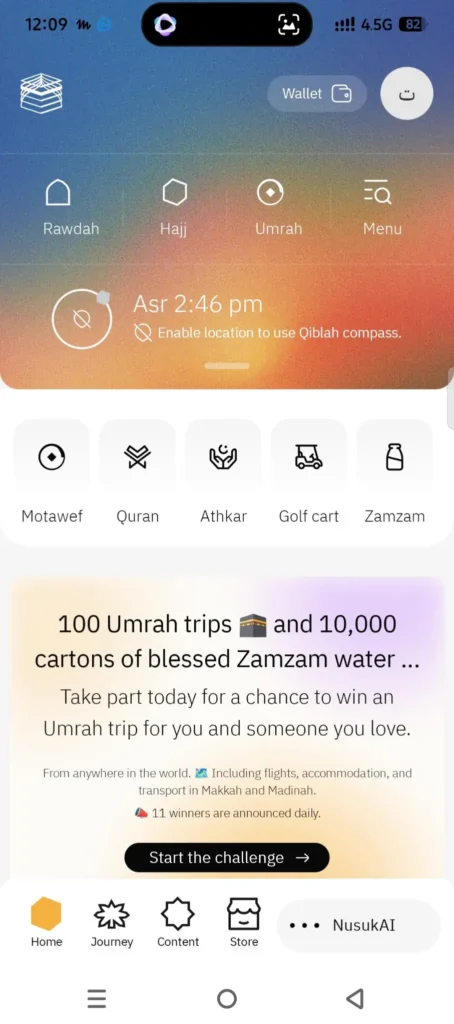
Download the Nusuk app and set it up. The app is where you manage your Umrah permit and your bookings in Saudi Arabia. Do it at home, while you have time and good internet, not at the airport.
2026.
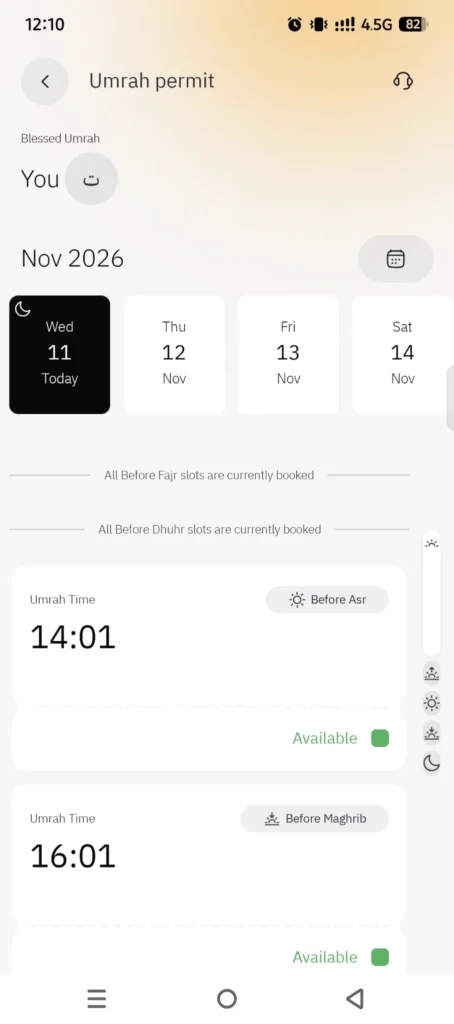
Book your flights and hotel — or confirm them. If you waited for the visa before booking, now is the time. If you booked through an agent, confirm the flight times, the terminal at Jeddah, and the hotel name and address. Check the distance from the hotel to the Haram on a map, not from the words in the listing.
Check your miqat. If you are flying into Jeddah to perform Umrah, you will cross your miqat in the air before you land. Work out which miqat applies to your route before your travel day, and be ready to enter ihram on the plane. This is covered in detail in the step-by-step guide linked below, and it is the mistake first-timers make most often.
Sort out your phone. Make sure your phone works in Saudi Arabia — roaming with your home network, or a Saudi SIM at the airport. Your phone is your map, your Nusuk app, your way of finding your group, and your way home. Do not land without a plan for it.
Read the rituals. The visa is the paperwork. The Umrah itself is the journey, and it is covered step by step in our guide to performing Umrah for the first time: Umrah Step by Step: How to Perform Umrah for the First Time. It walks through every ritual in order — ihram, tawaf, prayer, Zamzam, sa’i and the haircut — with every dua written out in Arabic, transliteration, Urdu and English at the exact step where you read it. Read it before you fly, and you will arrive knowing what is coming.
Practical Summary — Before You Apply
Route: Check nusuk.sa first. E-visa if it is open to your passport. Visa on arrival only if you hold a valid US, UK or Schengen visa that has been used. Agent if neither route fits — and only a licensed one.
Passport: Valid for at least six months from your arrival date, not from today. Renew early.
Photo: Recent, plain white background, face fully visible. Take a new one at a visa-photo studio.
Name: Exactly as on the passport, everywhere — visa, flight ticket, hotel booking.
Tickets: Return ticket, always. Never book a non-refundable flight before the visa is approved.
Timing: Apply at least two weeks before you fly. A month is comfortable. In Ramadan, apply as early as you can.
Fees: Check live on nusuk.sa before you pay. Never trust a fee from a blog post, including this one.
Agent: Licence number, an office you can visit, a written package with the timeline and the breakdown of the price. No written package, no payment.
If refused: Read the reason, fix exactly what was flagged, re-apply. Do not submit a second application while the first is open. Check the tourist visa as an alternative. Ask the embassy if nothing works.
If delayed: Check the status on Nusuk, contact your agent, and change the flight rather than flying without a visa.
Sources — official pages only. Nusuk, the official Saudi Umrah platform — https://nusuk.sa. Saudi eVisa portal (visa on arrival eligibility and fee) — https://visa.visitsaudi.com. 30-day entry window (since November 2025) and Schengen digital-stamp warning: verified against official guidance and 2026 reporting at publish time — recheck the live wording on Nusuk before you fly. No fee figure in this guide comes from a blog post. Every fee is shown on the Nusuk application screen before payment.
Frequently Asked Questions
Almost always, yes — unless you hold a passport from a GCC country. The visa you need depends on your passport: an e-visa on Nusuk, a visa on arrival if you hold a valid US, UK or Schengen visa, or a visa through a licensed agent. Check which route is open to your nationality on nusuk.sa before you book anything.
Yes, if the e-visa is open to your nationality. Apply on nusuk.sa: create an account, fill in your passport details, upload a recent photograph and a scan of your passport, pay the fee online, and the visa arrives by email. Most decisions come within a few working days, but apply at least two weeks before you fly.
The fee depends on your nationality and the route, and it changes. It is shown on the Nusuk application screen before you pay, and that is the number to trust — not a figure from a blog post. What I can tell you is what the fee covers (usually the visa plus the mandatory health insurance) and that the e-visa bought directly is the cheapest route, because there is no agent’s service charge. Check the live fee on nusuk.sa before you pay.
Most e-visa applications are decided within a few working days, but apply at least two weeks before you fly, and more in Ramadan. An application sent back for a document correction restarts the clock. Through an agent, the timeline is counted in days and depends on the agent’s queue and the season — ask for the date in writing before you pay.
If you hold a valid visa from the United States, the United Kingdom or a Schengen country — usually one that has already been used at least once — you may be eligible for a visa on arrival at the airport. You pay the fee by card at the counter. If you do not hold one of those visas, do not rely on this route. Check the current eligibility on the official visa site before you fly.
The rules for Pakistani passport holders have changed more than once, so check on nusuk.sa before you pay anyone anything — select Pakistan and it will show you the current route. In practice most Pakistani travellers go through a licensed Umrah agent, who arranges the visa with the flights and hotels as a package. The full Pakistan section above explains how to choose an agent and what to ask for in writing.
Read the reason given by Nusuk first. Most refusals are a passport with less than six months left, a photograph that did not meet the rules, or a name that did not match the passport. Fix exactly what was flagged and re-apply. If the Umrah route does not work for you, check whether a Saudi tourist visa — which also allows Umrah — is open to your nationality. The embassy or consulate is the last place to ask.
Yes — Saudi Arabia allows tourists to perform Umrah on a tourist visa. If the Umrah e-visa route does not fit your passport, the tourist e-visa may be the simpler route. Check the current rules for your nationality on the official visa site before you rely on it, because the terms and the validity are different from the Umrah visa.