Take a look around your kitchen right now. Chances are, there is a massive blue 19-liter water bottle sitting on a dispenser, and two or three empty bottles stacked awkwardly in the corner waiting to be exchanged.
For decades, the standard procedure for expats and locals in Saudi Arabia has been to rely entirely on bottled water companies (like Nova, Safa, or local delivery trucks) for all drinking and cooking needs. The tap water in the Kingdom, while highly treated and technically safe when it leaves the municipal desalination plants, picks up heavy minerals, chlorine, and pipe residue by the time it reaches your apartment faucet. Because of this, nobody drinks straight from the tap.
But the endless cycle of ordering water, carrying heavy bottles, and wasting kitchen space is exhausting and expensive.
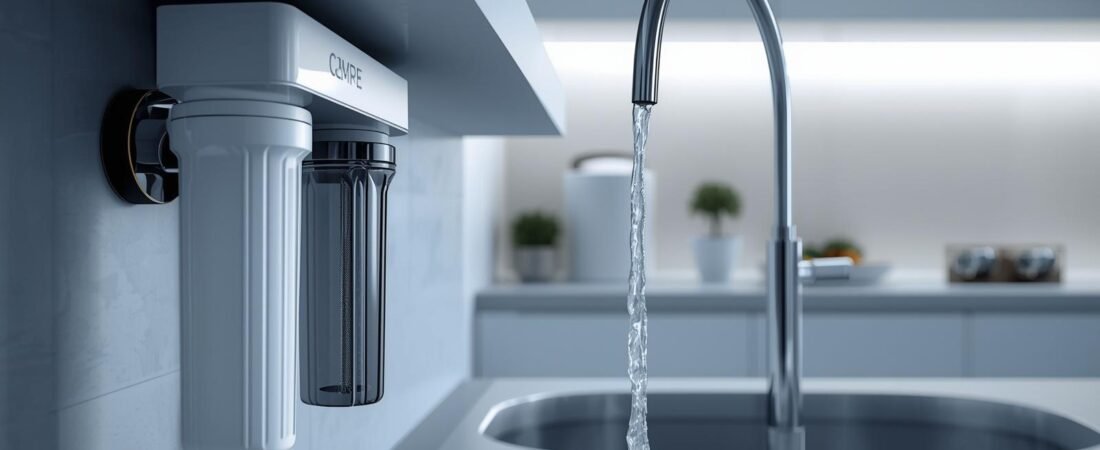
The modern solution that thousands of households in Riyadh and Jeddah are switching to is the Under-Sink Reverse Osmosis (RO) Water Filter. By installing a dedicated purification system hidden under your kitchen counter, you can have unlimited, perfectly safe, great-tasting drinking water on demand.
Here is the ultimate guide to understanding Saudi tap water, navigating renter-friendly installations, and the best water filtration systems currently available on Amazon Saudi Arabia.
1. The Truth About Saudi Tap Water (And Why Simple Filters Fail)
If you moved to the Middle East from Europe or North America, you might be tempted to buy a simple Brita pitcher or a cheap carbon filter that screws onto the end of your faucet. Do not do this.
Simple carbon filters are designed to remove the taste of chlorine. They do absolutely nothing to remove heavy dissolved minerals.
Saudi Arabia relies on desalinated seawater. This water is incredibly “hard.” If you measure the TDS (Total Dissolved Solids) of tap water in Riyadh, it frequently reads between 300 and 600 parts per million (ppm). For reference, premium bottled water usually reads between 100 and 150 ppm.
To make Saudi tap water taste exactly like premium bottled water, you cannot just filter it—you have to use Reverse Osmosis (RO).
What is Reverse Osmosis?
An RO system doesn’t just catch dirt in a sponge. It uses your apartment’s water pressure to force the tap water through a microscopic, semi-permeable membrane. This membrane is so incredibly fine that it strips away 99.9% of all heavy metals, calcium, magnesium, fluoride, and bacteria. It literally strips the water down to its pure H2O molecules.
2. Renter-Friendly Installation: Will I Lose My Deposit?
The biggest hesitation expats have about buying an under-sink filter is the installation. Since you don’t own the apartment, you are rightly worried about damaging the landlord’s granite countertop or messing with the plumbing.
Here is why you don’t need to worry:
- The Plumbing is Reversible: RO systems connect to your cold water line using a simple “T-valve.” You unscrew the existing pipe, screw the T-valve in the middle, and reattach the pipe. When you move out, you simply unscrew it and put it back exactly how you found it. Zero permanent changes to the pipes.
- The Countertop Dilemma: RO systems come with a beautiful, dedicated drinking water faucet. If your kitchen sink already has a built-in hole for a soap dispenser, you just remove the soap dispenser and put the water faucet there—no drilling required!
- If You Cannot Drill at All: If your sink has no extra holes and your landlord strictly forbids drilling the granite, look at our “Zero Installation” countertop pick in the section below.
3. The Best Water Filters on Amazon.sa (2026 Picks)
Not all RO systems are built the same. We have reviewed the best systems available locally, focusing on filtration quality, space-saving designs, and the availability of replacement filters.
The Premium Space-Saver: Waterdrop G3 Tankless RO System
Traditional water filters use a massive, bulky pressurized water tank that takes up your entire under-sink cabinet. The Waterdrop G3 completely revolutionizes this. It is a “Tankless” system that looks like a sleek computer tower. It uses an internal pump to filter water on demand at a blazing-fast speed of 400 gallons per day. It features a smart faucet with an LED ring that changes color to tell you exactly when it is time to change the filter.
- Best for: Small apartment kitchens, tech enthusiasts, and those who want premium design.
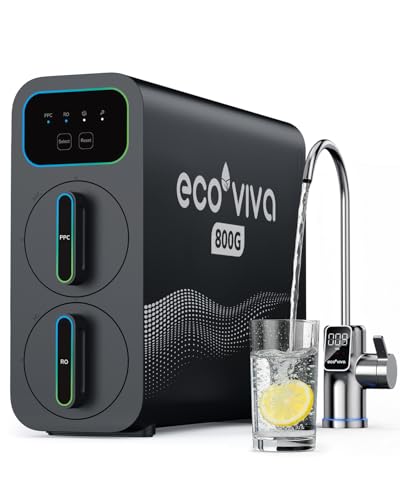
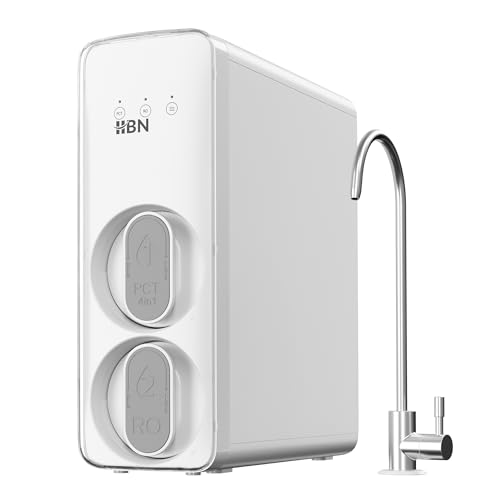
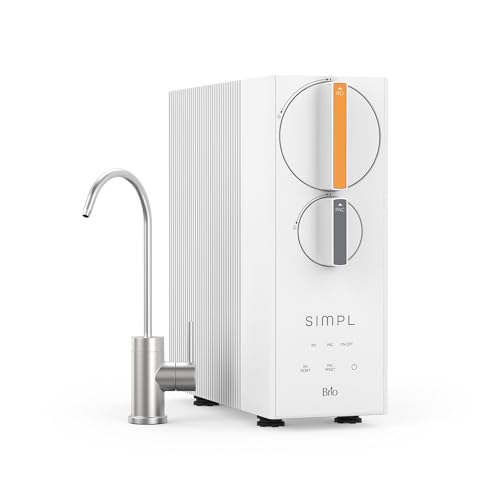
The KSA Standard Workhorse: Generic 6-Stage RO System with Mineralizer
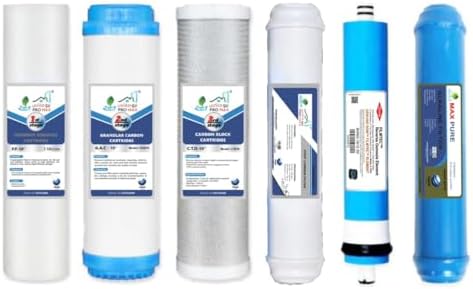
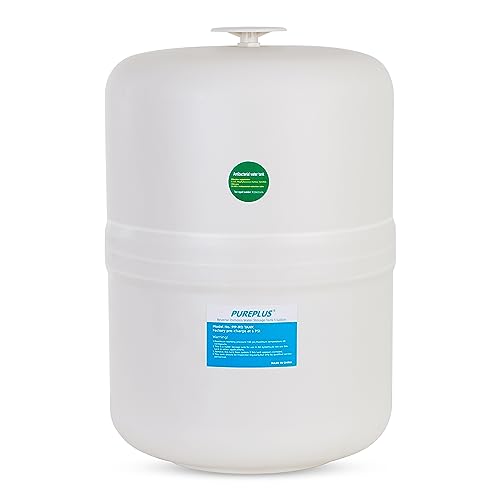
If you want the absolute best value for your money, the traditional 6-stage systems (often sold under various brand names like So-Safe, Aqua, or generic local assemblies) are the backbone of Saudi households. They use a separate storage tank to hold the clean water. The most important feature is the “6th Stage Mineralizer.” Because RO strips everything out of the water, this final stage adds healthy, sweet-tasting calcium and magnesium back into the water right before you drink it, mimicking the taste of expensive bottled mountain spring water.
- Best for: Large families, heavy daily cooking, and budget-conscious buyers.

The “Zero Installation” Renter Hack: Waterdrop Countertop RO Dispenser
If your landlord is incredibly strict, or if you simply have absolutely no space under your kitchen sink, this is the ultimate solution. This machine sits on your kitchen counter and plugs into a standard wall outlet. It requires zero plumbing. You simply fill the back tank with tap water, the machine runs it through an internal RO membrane, and dispenses perfectly pure drinking water into your glass. Some models even heat the water instantly for coffee or tea.
- Best for: Ultra-strict landlords, studio apartments, and avoiding plumbers entirely.


4. The Hidden Cost: Maintaining Your System
An RO system is not a “buy it and forget it” appliance. The filters must be changed to ensure the water remains safe to drink.
- Pre-Filters (Stages 1-3): These are the sediment and carbon blocks that catch the heavy dirt and chlorine to protect the delicate RO membrane. In Saudi Arabia, because the water is so hard, these should be changed every 3 to 6 months.
- The RO Membrane (Stage 4): This is the heart of the machine. Because the pre-filters do the heavy lifting, the expensive membrane usually only needs to be replaced every 12 to 24 months.
- Pro Tip: When you order your water filter system on Amazon, immediately add a set of replacement pre-filters to your cart so you aren’t left scrambling 6 months from now.
Frequently Asked Questions (FAQs)
Tankless systems and countertop systems require a standard wall outlet to power their internal pumps. Traditional 5-stage or 6-stage systems with a storage tank usually rely entirely on your apartment’s natural water pressure and do not require electricity, unless you live on the top floor of a high-rise and your water pressure is too low (in which case, you would buy a model with a “booster pump”).
Reverse Osmosis works by splitting the water. It pushes the pure water to your drinking faucet and flushes the heavy minerals and contaminants down the drain. For every 1 liter of pure drinking water created, older systems waste about 2 to 3 liters of water. Modern tankless systems (like the Waterdrop) are much more efficient, achieving a 1:1 ratio.
Absolutely! In fact, you should exclusively use RO-filtered water to fill your coffee machines, clothes irons, and bedroom humidifiers. Because the calcium is removed, your expensive espresso machine will never develop hard-water limescale buildup.
Conclusion
Making the switch from heavy blue bottles to a dedicated under-sink RO system is one of the most satisfying upgrades you can make to your Saudi apartment. By investing a few hundred Riyals upfront, you will save thousands of Riyals on water delivery over the next year, reclaim your kitchen floor space, and enjoy crisp, pure water on demand.
Now that your drinking water is pure, make sure your shower water is safe too. Read our guide on How to Stop Saudi Hard Water Hair Loss with a Shower Filter to protect your skin and hair.