Affiliate disclosure: This post contains affiliate links. If you buy something through them, Tabaix may earn a small commission at no extra cost to you. This helps keep our guides and free tools running.
Contents
- What Is a Power Bank and How Does It Work?
- Understanding Power Bank Capacity (mAh)
- What Capacity Do You Actually Need?
- Charging Speed and Ports Explained
- Size and Weight: Finding the Right Trade-Off
- Airline Carry-On Rules for Power Banks
- How to Maintain Your Power Bank for Long Life
- Frequently Asked Questions
What Is a Power Bank and How Does It Work?
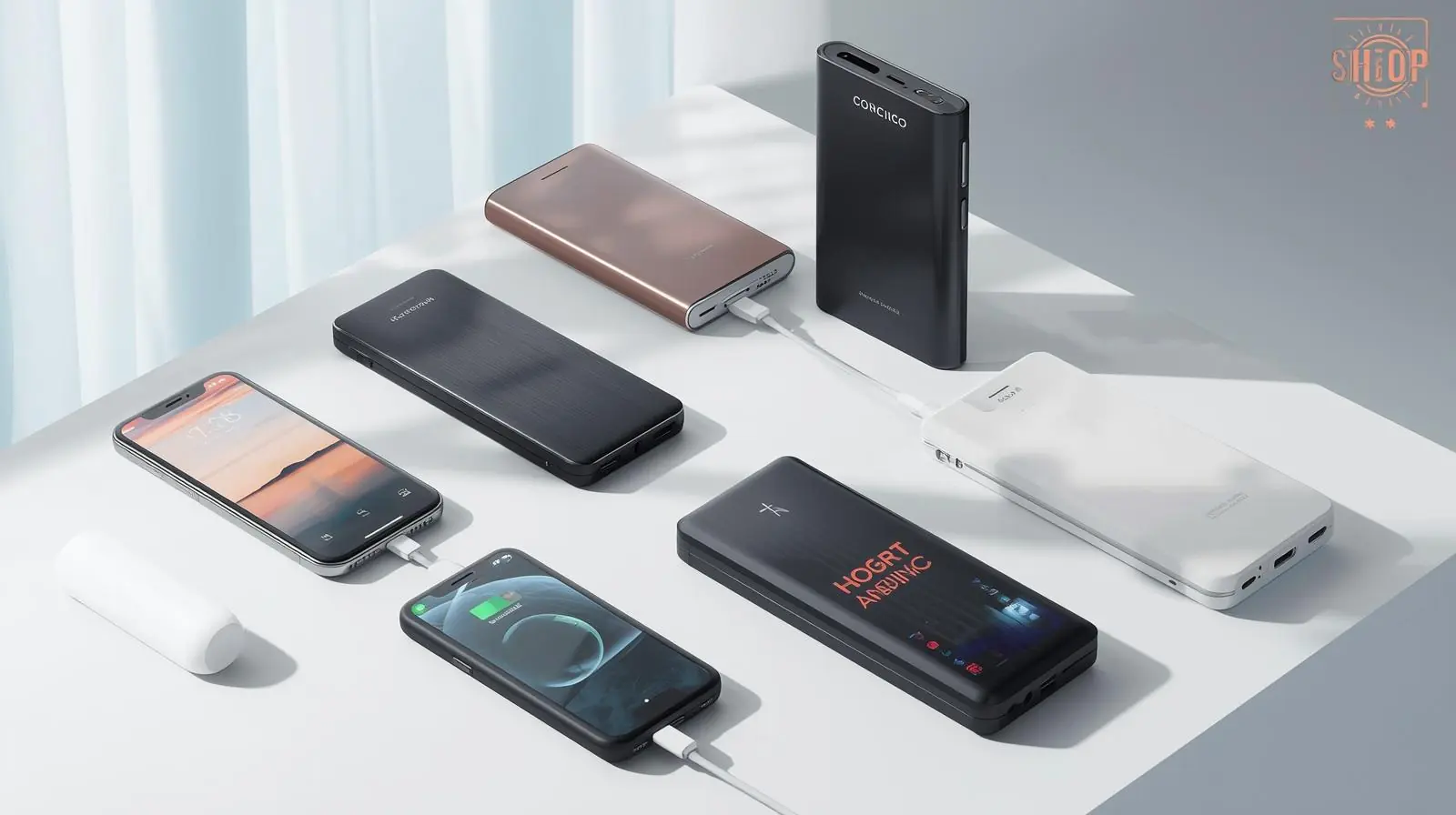
A power bank is a portable battery device used to charge electronic gadgets such as smartphones, tablets, earbuds, smartwatches, and even laptops when a wall outlet is not available. In today’s mobile-driven world, power banks have become an essential accessory for travelers, students, professionals, and anyone who spends long hours away from home.
Power banks store electrical energy in internal lithium-ion or lithium-polymer batteries and release that energy through USB or Type-C ports to recharge devices. Their usefulness lies in convenience, portability, and emergency backup power.
Understanding Power Bank Capacity (mAh)
Capacity is measured in milliampere-hours (mAh) and determines how many times a power bank can charge your device.
Top Power Banks to Buy in 2026
General Guide:
- 5,000 mAh – 1 phone charge
- 10,000 mAh – 2–3 phone charges
- 20,000 mAh+ – 4–6 phone charges or tablets/laptops
For example, if your phone battery is 2,500 mAh, a 10,000 mAh power bank can usually charge it about 3–4 times (energy loss always occurs).
Key Features to Look for When Buying a Power Bank
Types of Power Banks
Portable Power Banks


Small, lightweight, and ideal for everyday use or commuting.
High-Capacity Power Banks
Suitable for travelers, gamers, and heavy phone users.
Solar Power Banks

- 🔋【49800mAh HUGE CAPACITY】Boasting a 49800mAh premium Li-polymer battery, this solar power bank can charge your devices m…
- 🔋【BUILT-IN 4 CHARGING CABLES】Our upgraded solar charger features 3 output cables (Type-C *1, Lightning *1, and Micro USB…
- 🔋【SUPPORT WIRELESS CHARGING】Experience advanced wireless charging with this power bank, compatible with all wireless-ena…

- High-Quality Portable Solar Charger – water-resistant, shock-resistant and dustproof solar phone charger, featured with …
- Charge 6 Devices Simultaneously 4 Cables & 3 Ports – This solar charge power bank features 3 built-in output cables (Typ…
- Type-C Input/Output and Powerful LED Light – It makes it easy to charge 6 smartphones simultaneously or a tablet at full…
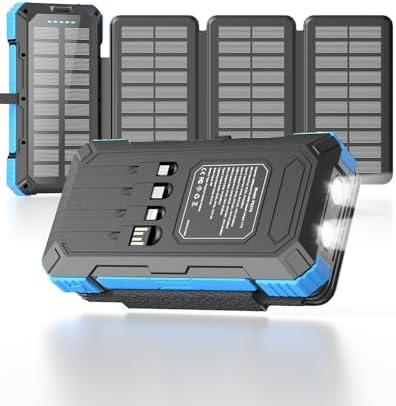
- 🔄 Power Bank with 4 Built-in Data Cables: This solar power bank features four built-in data cables (iOS, Type-C, USB-A, …
- 🔋 High Capacity and Safe and Reliable Power Bank:49800mAh ultra-large capacity solar charger that can keep your phone ru…
- ☀️ 4 Solar Panels, 8X Solar Efficiency:Now you can charge your solar battery bank with built-in 4 solar panels. Those pr…
Recharge using sunlight. Helpful for camping, hiking, or emergency situations, though slower than wall charging.
Wireless Power Banks
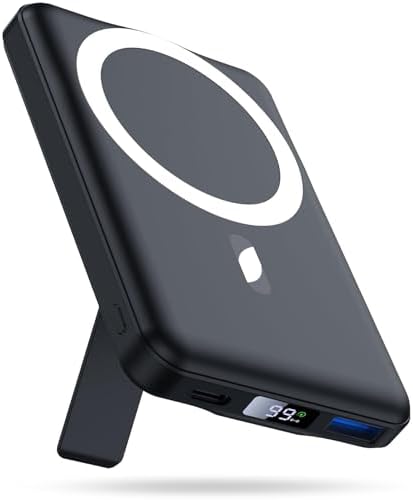
- 【Magnetic Power Bank for 17/16/15/14/13/12】 The mag-safe portable charger with the remarkable 10,000mAh battery designed…
- 【Strong Wireless Portable Charger】 For MagSafe battery pack with the newest magnetic technology (stronger magnetic and n…
- 【Card-Sized, Easy to Carry】 This mag safe. charger into your pockets or bags, thanks to its compact dimensions of 4.09 ×…
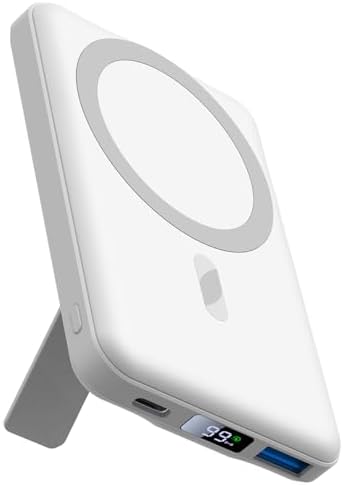
- 【Magnetic Power Bank for 17/16/15/14/13/12】 The mag-safe portable charger with the remarkable 10,000mAh battery designed…
- 【Strong Wireless Portable Charger】 For MagSafe battery pack with the newest magnetic technology (stronger magnetic and n…
- 【Card-Sized, Easy to Carry】 This mag safe. charger into your pockets or bags, thanks to its compact dimensions of 4.09 ×…

- 【Strong Magnetic Charger for MagSafe】Built with upgraded N52 magnets that snap firmly into place for stable magnetic wir…
- 【22.5W Fast Charging & 10000mAh Capacity】Features USB-C PD fast charging and a 22.5W USB-A output to deliver rapid power…
- 【LED Display & Smart Safety Protection】A clear LED digital screen shows the exact remaining battery level at a glance. B…
Provide cable-free convenience for compatible devices.
1. Charging Speed
Look for fast-charging technologies such as:
- Quick Charge (QC)
- Power Delivery (PD)
- Super Fast Charging
These reduce charging time significantly.
2. Number of Ports
Multiple ports allow you to charge:
- Phone + earbuds
- Phone + tablet
- Two phones at once
3. Size & Weight
- Compact models – Best for pockets and daily carry
- Large capacity models – Better for travel and long trips
4. Wireless Charging
Useful for cable-free charging if your phone supports it.
5. Built-in Cables
Eliminates the need to carry extra wires.
6. Safety Protection
Always choose models with:
- Over-charge protection
- Short-circuit protection
- Temperature control
- Surge protection
Top Power Bank Capacity Recommendations
| Usage Type | Recommended Capacity |
|---|---|
| Daily Office / School | 10,000 mAh |
| Travel & Long Trips | 20,000 mAh |
| Laptop Support | 25,000 mAh+ with PD |
| Emergency Backup | 15,000–20,000 mAh |
What Capacity Do You Actually Need?
Start with how you actually use your devices, not with the biggest number on the box. A power bank that is too small will run out before the day ends, while one that is much larger than you need will be heavier and bulkier to carry every day.
If you only charge a phone, think in terms of full charges. Check your phone battery size, then allow for some energy loss during charging.
Tablets and laptops need more. A tablet battery is larger than a phone battery, and a laptop battery is larger again, so the same bank that tops up a phone twice may only partly charge a laptop.
Charging Speed and Ports Explained
Wattage is simply a measure of how much power a charger can deliver at once. In plain terms, a higher wattage usually means a faster charge, but only up to the limit your phone, tablet or laptop can accept.
For most phones, a USB-C Power Delivery, or PD, output is the feature to look for, because it lets the bank and the device agree on a safe, faster charging speed.
If you also charge a tablet or a small laptop, look for a higher PD wattage and a USB-C port that can both charge the bank and charge your device. Two outputs are useful if you often charge two devices at once, but remember that the total power may be shared.
Size and Weight: Finding the Right Trade-Off
Capacity and size go together. A small bank slips into a pocket or a small bag and is easy to carry all day, but it will run out sooner. A large bank lasts longer, yet it takes up more space and adds noticeable weight.
Think about where the bank will live. For daily use, a slim bank that fits with your phone is usually the most practical choice. For travel, a slightly larger bank in a backpack or carry-on is a fair trade for extra charges.
Airline Carry-On Rules for Power Banks
Power banks belong in your cabin bag, not in checked baggage, on most airlines. That is because lithium batteries are safer where cabin crew can reach them.
As a general rule, smaller banks are fine for cabin travel, while larger banks may need airline approval, and the largest ones may not be allowed at all. Airlines usually set their limits in watt-hours, or Wh, rather than in mAh, so check the Wh rating printed on your bank or in its manual.
Before you fly, check the Wh rating, keep the bank in your cabin bag, and carry the cable you need. That simple check avoids a last-minute surprise at security and keeps your devices charged when you land.
How to Maintain Your Power Bank for Long Life
1. Avoid Extreme Heat
Store in a cool, dry place. Heat reduces battery lifespan and can be dangerous.
2. Do Not Fully Drain Often
Lithium batteries perform best between 20% – 80% charge.
3. Use Quality Chargers
Cheap cables and adapters can damage internal circuits.
4. Inspect Regularly
Stop using immediately if you notice:
- Swelling
- Overheating
- Strange smells
- Corrosion
5. Charge Before Long Storage
If not using for months, keep it around 50–70% charged.
Frequently Asked Questions
For most smartphones, 10,000–20,000 mAh is ideal.
Yes, but it must support Power Delivery (PD) and have high capacity (20,000 mAh+).
Good for emergencies and outdoor activities, but slower for daily use.
Yes. After 2–3 years, battery efficiency gradually decreases.
Choosing the right power bank depends on your device battery size, travel habits, and charging speed needs. A well-selected power bank ensures you stay connected, productive, and stress-free wherever you go. Investing in quality and safety features will provide reliable performance for years.